
Quick Summary
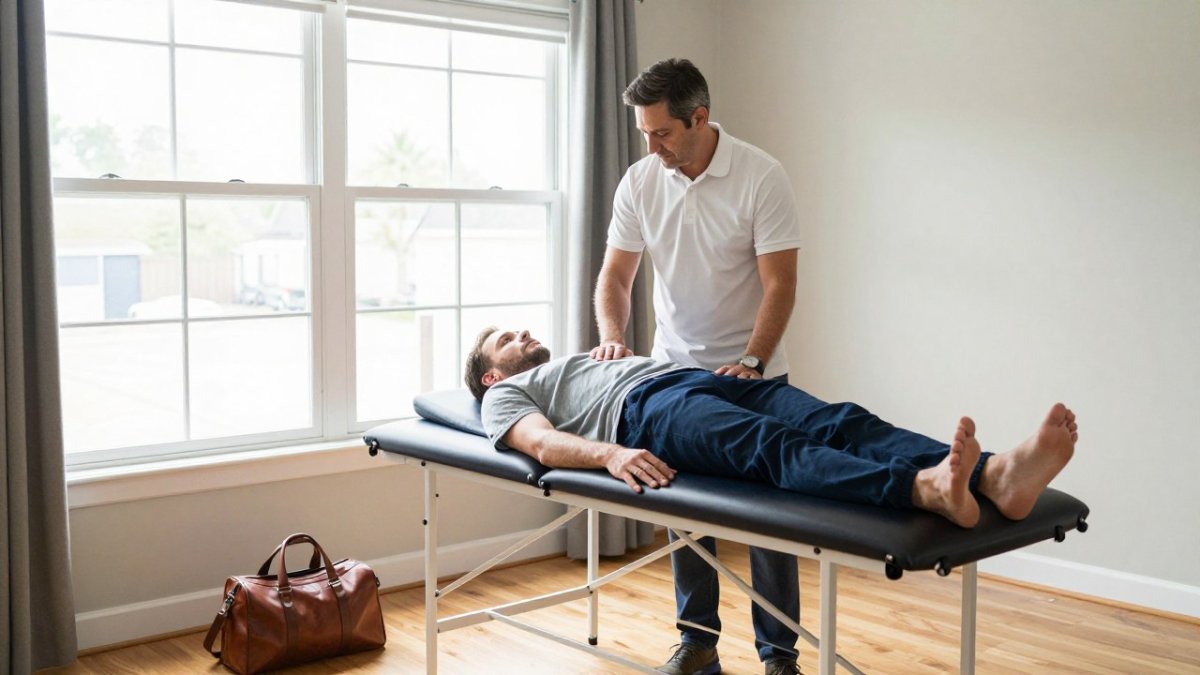
Mobile chiropractic home visits bring a licensed chiropractor to your home, office or another chosen location, so you can receive care without travelling to a clinic. This removes travel, waiting and scheduling barriers, which helps many people with chronic neck or back pain keep up consistent treatment.
- Mobile chiropractic home visits eliminate commuting, parking and waiting room time.
- Care is delivered in a familiar space, which many patients find more comfortable.
- Scheduling can be arranged around your availability, supporting consistent treatment.
- Verify licensure, malpractice coverage, equipment sanitation and an emergency plan before booking.
- Seek urgent medical evaluation for red flags such as new leg weakness or bladder or bowel changes.
Is a home visit right for your back pain?Dr Dom offers individualized home and office chiropractic visits across New York.
Table of Contents
- What Mobile Chiropractic Home Visits Involve
- Key Benefits of Mobile Chiropractic Home Visits
- Mobile Chiropractor vs. Clinic Chiropractor: A Side-by-Side Comparison
- What to Expect From a Mobile Chiropractor
- How to Prepare for Your Mobile Chiropractic Appointment
- Who Is and Isn’t a Good Candidate for a Home Visit
- How Often Should You See a Chiropractor, and Booking Your First Home Visit
- Frequently Asked Questions
What Mobile Chiropractic Home Visits Involve
Last Updated: November 19, 2026
Mobile chiropractic home visits bring a licensed chiropractor to your home, office or another location of your choosing, so you can receive care without travelling to a clinic.
At Dr Dom, the practice offers home and office visits, led by Dr. Dominick Fazzari, a licensed chiropractor with over 25 years of experience.
Mobile visits can take place in a living room, bedroom or home office. What matters most is a clear space where you can lie down or sit comfortably for the session.
Not every condition is suited to a home visit, and a qualified chiropractor will tell you if a clinic setting would serve you better.
Key Benefits of Mobile Chiropractic Home Visits
Mobile chiropractic home visits offer several practical advantages over traditional clinic care. The benefits fall into two broad groups: how the visit fits into your day, and how the care itself feels. Both affect whether people keep their appointments and stay with a treatment plan long enough to see results.
Convenience, Comfort and Reduced Travel Time
The most immediate benefit is that you skip the commute. There is no drive, no parking and no waiting room. For someone managing back pain after a long workday, arriving home to a visit can be the difference between going and not going.
Comfort is the second advantage. Many patients find it easier to relax in a familiar room, which can make the adjustment and follow-up conversation feel less clinical.
Reduced travel time also matters for people with limited mobility or no reliable transport. Care that comes to you removes a barrier that otherwise keeps some people from starting treatment at all.
Personalized Attention and Flexible Scheduling
Home visits can offer one-on-one attention. This suits patients who want a detailed explanation of their condition and a clear view of what each step of treatment is for.
Scheduling can also be arranged around your availability, which helps people who cannot easily leave work or family commitments. Consistency is one of the strongest predictors of progress, so a schedule you can actually keep has real value.
Mobile Chiropractor vs. Clinic Chiropractor: A Side-by-Side Comparison
Choosing between a home visit and a clinic visit depends less on which is “better” and more on which setting safely supports the care you need. The table below summarizes the practical differences, and the sections that follow explain how to evaluate them.
| Factor | Mobile (Home or Office Visit) | Clinic Visit |
|---|---|---|
| Travel time | None or minimal | Commute and parking required |
| Setting | Familiar home or office | Clinical environment |
| Waiting | Usually none | Possible waiting room time |
| Scheduling | Often flexible, arranged around you | Set clinic hours |
| Equipment | Portable, brought to you | Full in-clinic setup |
| Imaging on site | Rarely available | Often available or coordinated |
| Privacy | Your own space, but household members may be present | Private treatment room |
| Best for | Limited mobility, busy schedules, comfort-focused care | Patients needing a full clinical setup or same-day imaging |
Home visits offer convenience and comfort that many patients find makes ongoing care possible. A consultation can help determine whether a home visit is a reasonable option for your situation. See the services side by side. Compare the home and clinic setups in more detail.
How to Vet a Mobile Chiropractor Before You Book
Because a home visit moves care outside a regulated clinical environment, the burden of checking credentials falls more heavily on you. A short checklist closes most of the risk:
- Licensure and scope. Confirm the chiropractor is licensed and that home visits are within their scope of practice. Ask for their license details before booking.
- Malpractice coverage. Ask whether the practice carries professional liability coverage that extends to off-site visits.
- Sanitation and equipment. Ask how portable equipment is transported and cleaned between patients.
- Consent and records. Ask what written documentation you will receive, such as a consent form, treatment plan or visit notes.
- Emergency plan. Ask what the chiropractor does if you feel faint, develop new neurological symptoms or need urgent help.
Watch out: a provider who cannot or will not answer licensure, insurance, and emergency-procedure questions before the first visit is a reason to pause, not to book.
Who May Not Be a Good Fit for a Home Visit
Home visits work best for uncomplicated neck, mid-back, and low-back pain in adults who can lie down and move safely in their own space. They are a poorer fit when the evaluation needs equipment or imaging that cannot travel, or when symptoms suggest something more serious than a mechanical complaint.
Seek urgent medical evaluation rather than booking a home visit if you have new weakness or numbness in an arm or leg, loss of bladder or bowel control, unexplained weight loss, fever with back pain, or pain after a significant fall or accident. Once urgent warning signs have been ruled out, proactive chiropractic care can focus on addressing everyday concerns before they disrupt daily life.
For everyone else, the honest answer is that a consultation decides it. Ask the chiropractor directly whether your presentation is appropriate for a home setting and whether a clinic visit or physician referral would be safer.
What to Expect From a Mobile Chiropractor
A typical first visit starts with a conversation. The chiropractor asks about your symptoms, past injuries, daily activities and goals for treatment. This history shapes everything that follows, so bring any relevant records, imaging or notes from other providers.
Next comes an examination of your posture, spinal movement and areas of tenderness. The chiropractor explains what they find in plain language and outlines a recommended plan, including how often visits should take place. Read what to expect when seeing a chiropractor for neck pain in Manhattan.
Hands-on care follows if it is appropriate. Dr Dom’s Advanced Biostructural Correction approach focuses on full-body alignment, and the chiropractor will explain the specific technique being used and why.

How to Prepare for Your Mobile Chiropractic Appointment
Preparation makes a home visit more productive. Start by choosing a clear space with enough room for the chiropractor’s portable equipment and for you to lie down or sit comfortably. A firm surface and good lighting help. Find out how to book a mobile chiropractor in Manhattan.
Before the visit, gather the following:
- A list of your current symptoms and when they occur
- Any imaging, referrals or notes from other providers
- A list of medications you take
- Your insurance information, so coverage can be confirmed in advance
- Questions you want answered
Wear loose, comfortable clothing that allows easy access to your neck, back or the area being treated. Confirm your appointment time and location in advance, and let the office know about any pets or access instructions.
Who Is and Isn’t a Good Candidate for a Home Visit
Many adults with musculoskeletal pain can benefit from a home visit, including office workers with sedentary strain, active people recovering from sports injuries and workers with repetitive physical demands.
Home visits may not be the right choice for everyone. Some conditions need a full clinical setup, diagnostic imaging or coordination with other specialists. People with significant mobility limits may also need a different arrangement.
A consultation is the best way to find out. The chiropractor can explain whether home care suits your condition and whether a clinic visit would be safer.
How Often Should You See a Chiropractor, and Booking Your First Home Visit
Visit frequency depends on your condition, your goals, and how you respond to care. Visit frequency is set individually; ask your chiropractor to explain the expected plan. Ask your chiropractor to state an expected number of visits and the objective signs that would justify continuing, pausing, or stopping. A plan that is open-ended with no review point is harder to evaluate.
What a Home Visit Typically Costs and How Insurance Fits
Pricing depends on the visit type, schedule and the practice’s policies. Before you book, ask Dr Dom for current pricing or a quote, and ask for the following in writing:
- The per-visit rate for a home visit
- Any travel charge, if applicable
- How insurance is handled
- Which insurers and plans the practice works with
- The cancellation and rescheduling policy
Coverage for chiropractic care depends on each patient’s individual insurance policy. Confirm benefits with your insurer and ask the practice how insurance is handled. If you are paying out of pocket, ask about any available rates.
Step by Step: Booking and Preparing for a Home Visit
- Share your symptoms. Describe your main symptoms and any red flags so you can discuss whether a home visit is appropriate.
- Confirm cost and coverage. Get the pricing and insurance details in writing before scheduling.
- Choose a suitable time. Pick a time that is comfortable for you.
- Prepare the space. Clear enough room for a portable table and for you to move comfortably, and choose a firm surface if you will lie on the floor.
- Gather records. Bring imaging, referrals, medication lists, and notes from other providers.
- Manage the household. Let the practice know about pets, stairs, parking, and whether other people will be present.
- Plan follow-up. Ask when you should expect to notice change and when the next visit should be scheduled.
Watch out: a firm surface is not the same as a soft mattress.
To book a first home visit, contact Dr Dom to schedule a consultation. Ask about the length of the visit, the expected course of treatment, and how insurance is handled.
Dr Dom offers home and office visits, with no long-term contracts. Book an appointment to find out whether a mobile visit is the right fit for your neck or back pain.
Book an Appointment with Dr Dom to discuss whether a mobile chiropractic home visit suits your needs. Visits are individualized, and your first conversation is the place to ask every question you have.
Frequently Asked Questions
What is a mobile chiropractor?
A mobile chiropractor is a licensed chiropractor who brings examination and treatment to your home or workplace instead of requiring you to travel to a clinic. Visits typically use portable equipment, such as a folding treatment table, so the appointment can take place in a living room, bedroom or office. The core services, including assessment, spinal adjustment and a treatment plan, are the same as in a clinic. Confirm the provider’s licensing and ask what equipment they bring before booking.
Is a mobile chiropractor as effective as an office-based chiropractor?
Effectiveness depends on the provider’s training and the treatment plan, not on the location. A mobile chiropractor who is licensed and uses the same assessment and adjustment methods as a clinic can deliver comparable care. Home visits may limit access to some diagnostic tools found in a full clinic, so a provider may refer you for imaging or other testing when needed. Ask how the practice handles cases that need more equipment than can be brought to your home.
How should I prepare for a mobile chiropractic appointment?
Clear a space large enough for a portable table and for you to move comfortably, and make sure there is a safe place to park or a clear entrance for the practitioner. Have a list of your symptoms, current medications, past injuries and any medical conditions ready. Wear loose, comfortable clothing that allows access to the area being treated. Write down questions about your treatment plan, expected duration and cost before the visit.
Do chiropractors do home visits?
Some chiropractors offer home visits, sometimes called house-call or mobile chiropractic care. Availability varies by provider and service area, so check directly with the practice. Home visits may be a good fit for people with limited mobility, busy schedules or transportation challenges. Ask whether the practice accepts your insurance for home visits, since coverage rules differ and should be verified with your insurer before treatment.
