

Last Updated: November 8, 2026
Quick Summary
Chronic sedentary back pain is usually fixed by breaking up long periods of sitting, setting up your workstation correctly, and doing core and hip mobility exercises several times a week. Pain that is new, spreads down a leg, or comes with weakness or bladder changes needs urgent medical assessment.
- Stand, move your hips, and walk for about two minutes every 30 to 45 minutes.
- Set the top of your monitor at or slightly below eye level, with elbows bent near 90 degrees.
- Do dead bugs, bird dogs and glute bridges two to three times per week.
- Track daily pain, sitting tolerance and walking time weekly for four to six weeks.
- Seek urgent care for bladder or bowel changes, groin numbness or progressive leg weakness.
Is sitting all day wearing down your back?Dr Dom offers individualized chiropractic care in Manhattan, Melville and beyond, with office and home visits.
Table of Contents
- Why Sitting All Day Leads to Chronic Back Pain
- Lower Back Pain From Sitting: Posture and Workstation Setup
- 7 Exercises for Lower Back Pain That Build Core and Hip Mobility
- Back Stretches for Sitting All Day and Movement Breaks
- When Does Back Pain Become Chronic, and When to Seek Urgent Care
- A Progressive Plan to Return to Activity and Track Your Progress
- Booking Your Consultation With Dr Dom
- Frequently Asked Questions
Why Sitting All Day Leads to Chronic Back Pain
If you spend most of your working day in a chair and your lower back aches by mid-afternoon, you are far from alone. Our guide on why adjustments don’t last explains the underlying reasons.
The spine is built to move. Discs, ligaments and muscles depend on regular changes in load and position to stay nourished and supple. Sit for hours without shifting and the lower back muscles stay contracted, the hip flexors shorten, and the discs sustain pressure for long periods, producing the dull, persistent ache many people accept as normal.
How inactivity and prolonged sitting load the spine
Prolonged sitting flattens the natural curve of the lower back and pushes the pelvis into a posterior tilt, increasing load on the lumbar discs compared with standing. Stabilizing muscles switch off while others tighten to compensate. The pain is rarely purely muscular; it usually reflects tight hips, weak core muscles and a static posture held for hours.
Lower Back Pain From Sitting: Posture and Workstation Setup
Your desk setup is one of the most overlooked contributors to sitting-related back pain. If posture changes alone haven’t resolved it, see our chiropractic lower back care page.
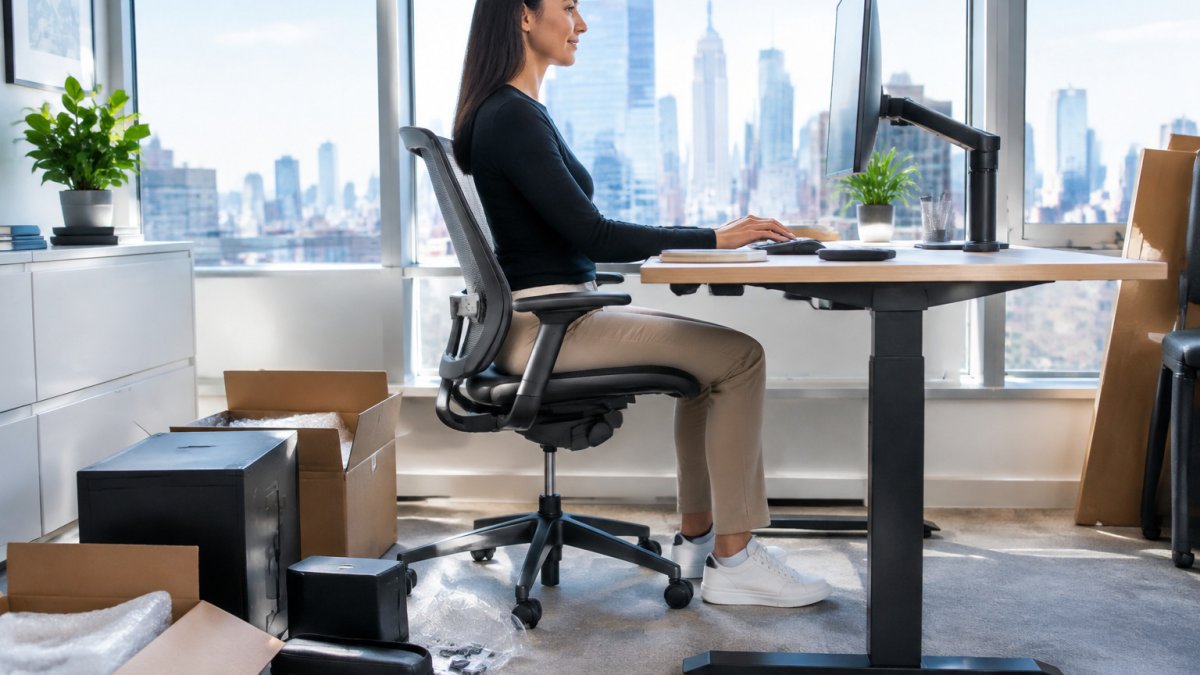
Desk habits play a major role in how long any relief from sitting-related stiffness lasts, so workstation changes are worth considering alongside professional guidance. Read whether posture correction can last in Can a Chiropractor Fix Your Posture for Good?.
Screen height, chair support and feet flat on the floor
Set the top of your monitor at or slightly below eye level so your neck stays neutral. Your elbows should bend at roughly 90 degrees with your wrists straight.
Many people sit with their weight shifted to one side or their legs crossed, which twists the pelvis and loads one side of the lower back more than the other. Sitting evenly on both sit bones reduces that asymmetry.
Personalizing the setup for office, home and hybrid work
Office setups usually offer adjustable chairs and monitors, so the main task is configuring them correctly. Home and hybrid workers often sit on sofas, kitchen chairs or laptops on a bed, the worst posture for the spine.
Because each person’s body and work pattern differs, the ideal setup is individual: leg length, height, typing hours and multiple screens all change what counts as correct. Learn when to see a chiropractor for symptoms like these.
7 Exercises for Lower Back Pain That Build Core and Hip Mobility
Exercise is where lasting relief usually comes from. The right program strengthens the deep trunk muscles, restores hip movement and builds tolerance for sitting. Start with a few repetitions of each movement and stop if you feel sharp pain.
The seven exercises below focus on core stability and hip mobility. Perform them two to three times per week, alongside daily movement breaks.
Core strengthening and trunk stability
- Dead bug: Lie on your back with arms reaching toward the ceiling and knees bent at 90 degrees. Slowly extend one arm and the opposite leg while keeping your lower back gently pressed toward the floor. Alternate sides for 8 to 10 repetitions each.
- Bird dog: From hands and knees, extend one arm forward and the opposite leg back, keeping the hips level. Hold for three seconds, then switch. Complete 8 to 10 repetitions per side.
- Glute bridge: Lie on your back with knees bent, then lift your hips until your body forms a straight line from shoulders to knees. Hold for three seconds and lower slowly. Aim for 10 to 12 repetitions.
These moves train the transverse abdominis and multifidus, the muscles that stabilize the spine, reducing the load sitting places on the lower back.
Hip mobility for tight muscles
- Hip flexor stretch: Kneel on one knee with the other foot forward. Gently shift your hips forward until you feel a stretch at the front of the hip, keeping your torso upright. Hold for 30 seconds per side.
- 90/90 hip rotation: Sit on the floor with both knees bent at 90 degrees, one in front and one to the side. Keeping your back tall, lean forward slowly over the front leg. Hold for 20 to 30 seconds, then switch.
- Cat-cow: On hands and knees, alternate between arching and rounding your back with slow breathing. Repeat for 8 to 10 cycles to restore spinal mobility.
- Child’s pose: Sit back on your heels with arms stretched forward and forehead resting on the floor. Hold for 30 to 60 seconds to ease tension through the lower back and hips.
Hip mobility matters because tight hip flexors pull the pelvis forward and increase strain on the lumbar spine.
The seven exercises below build core stability and hip mobility, with suggested reps or hold times.
| Exercise | Target | Reps or hold |
|---|---|---|
| Dead bug | Core stability | 8-10 reps per side |
| Bird dog | Trunk stability | 8-10 reps per side |
| Glute bridge | Core and glutes | 10-12 reps |
| Hip flexor stretch | Hip flexors | 30 seconds per side |
| 90/90 hip rotation | Hip mobility | 20-30 seconds per side |
| Cat-cow | Spinal mobility | 8-10 cycles |
| Child’s pose | Lower back and hips | 30-60 seconds |
Back Stretches for Sitting All Day and Movement Breaks
Even with good posture and strong muscles, sitting for long periods will cause stiffness unless you interrupt it. The goal is not to stretch once a day but to move regularly throughout the workday. What separates a movement-break habit that sticks from one that fades is specificity: knowing exactly what to do, how long, and how to adapt when your back is flaring.
A concrete movement-break protocol
Set a reminder to stand, walk or stretch every 30 to 45 minutes.
Use this simple three-part break structure so you are not deciding what to do in the moment: (Source: Occupational Safety and Health Administration (OSHA) guidelines for ergonomic workstations)
- Stand and reset (20 seconds): Stand up, place your hands on your hips, and gently extend your lower back by leaning back a few degrees. Take three slow breaths. This reverses the flexed position your spine has held in the chair.
- Move the hips (40 seconds): Perform five standing hip hinges (push your hips back as if closing a drawer, keep your chest tall) and five slow standing side bends to each side. These target the hip flexors and lateral trunk that stiffen most during sitting.
- Walk (60 seconds): Walk to a water fountain, the mailbox, or simply down the hallway and back. Walking restores circulation to the discs and re-engages the gluteal and trunk muscles that switch off in a chair.
Repeat this cycle two to three times per workday in addition to your exercise sessions. Frequency matters more than duration: three two-minute breaks spread across the day outperform one 15-minute stretch session for sitting-related stiffness.
Stretches that pair with movement breaks
Keep stretches gentle. Hold each position for 20 to 30 seconds without bouncing, and breathe slowly. If a stretch increases numbness, tingling or sharp pain, stop and seek professional advice.
- Standing hip flexor stretch: Step one foot forward into a short lunge, tuck your pelvis slightly, and shift your weight forward until you feel a stretch at the front of the rear hip. Hold 30 seconds per side. This stretch targets the hip flexors, which can feel tight after long periods of sitting.
- Seated spinal twist: Sit tall, cross one leg over the other, and rotate your torso toward the crossed leg, using the chair back for gentle leverage. Hold 20 to 30 seconds per side.
- Standing side bend: Reach one arm overhead and lean gently to the opposite side, feeling a stretch along your side and lower back. Hold 20 seconds per side.
Adapting movement breaks during a flare
When pain is flaring, do not abandon movement entirely, but scale it back. Shorten the walk to 30 seconds and perform only the standing reset and gentle hip hinges, avoiding stretches that provoke symptoms. Keep moving in a range that does not increase pain, then rebuild as symptoms settle.
Watch out: If a movement break consistently produces sharp pain, numbness, or pain that radiates below the knee, stop that movement and note which one triggered it. Tracking which movements trigger symptoms can help guide a broader plan for managing persistent back pain, including approaches discussed by C3 Wellness Spa.
When Does Back Pain Become Chronic, and When to Seek Urgent Care
Back pain is generally considered chronic when it persists for more than three months, though many people with ongoing sitting-related discomfort have pain that cycles in and out for years. Pain that keeps returning despite self-care is a reason to seek a professional assessment rather than wait. Our article on why back pain keeps returning covers recurrence in more detail. Knowing the difference between routine chronic discomfort and symptoms that need prompt medical attention helps you act appropriately.
Routine chronic pain versus urgent symptoms
Most sedentary back pain is mechanical: it worsens with prolonged sitting or certain movements and eases with position changes, walking, or rest. That pattern suits self-management and gradual exercise progression.
Seek urgent care or emergency evaluation if you experience any of the following:
- Loss of bladder or bowel control, or new difficulty urinating, especially alongside back pain or leg weakness. This can indicate cauda equina syndrome, a rare but time-sensitive condition.
- Numbness in the groin or inner thighs (sometimes called saddle anesthesia), which is another red flag for the same condition.
- Progressive weakness in one or both legs, such as difficulty lifting your foot or rising from a chair, that is new or worsening.
These signs can indicate a serious condition and should not be managed at home. For ongoing but non-emergency pain, an evaluation can clarify whether structural, muscular or lifestyle factors are driving your symptoms.
When to see a professional for non-urgent chronic pain
If your pain has persisted beyond six to eight weeks despite consistent movement breaks, workstation changes and the exercises in this guide, or if it interferes with sleep, work or daily activities, a structured assessment is reasonable. A focused evaluation helps distinguish mechanical patterns that respond to exercise and posture changes from other contributors that need a different approach.
Evidence-based expectations and timelines
Realistic expectations matter for both safety and motivation. Recovery timelines vary between individuals. Exercise and activity changes may reduce pain for some people, and setbacks can occur during recovery.
Track three measures weekly: your average pain interference (how much pain limits daily activities, rated 0 to 10), your sitting tolerance (how long you can sit before symptoms force a break), and your walking time or step count. Improvement in any one over four to six weeks suggests your changes are helping. If none improve after that period, or symptoms worsen, reassess with a professional rather than continuing the same plan.
Watch out: Do not use the presence of chronic pain as a reason to delay evaluation of a new or different symptom, such as leg weakness, numbness, or pain that has changed character.
A Progressive Plan to Return to Activity and Track Your Progress
Lasting recovery is gradual. A practical plan has three stages. In the first two weeks, focus on short walks, daily movement breaks and the simplest exercises, such as the glute bridge and cat-cow, to reduce irritation.
Track your progress with a simple log: daily pain on a scale of 0 to 10, hours sat, movement breaks taken and exercises completed. Review it weekly.
Booking Your Consultation With Dr Dom
If your back pain keeps returning despite changes to your workstation and routine, a structured assessment can identify what is driving it. Dr Dom, led by Dr. Dominick Fazzari, offers individualized care, with office and home visits in New York City, Long Island and Connecticut.
To discuss your symptoms and find out whether this approach fits your needs, book an appointment today and take the first step toward lasting relief.
Frequently Asked Questions
How can I live with chronic back pain?
Chronic back pain is usually managed rather than cured in one step. Keep moving through the day, break up long periods of sitting, and build a regular exercise routine that you can sustain. Sleep, stress and weight all influence how the pain behaves, so address them alongside movement. Track which activities trigger flare-ups and which ease them, and adjust gradually. If pain limits your work or sleep for several weeks, arrange a consultation with a qualified health professional to review your options and a plan that fits your situation.
What could be causing my lower back pain when I sit but not stand?
Pain that appears mainly while sitting often relates to posture, sustained spinal flexion, tight hip flexors, or a chair and desk setup that places extra load on the lower back. Sitting for long periods also reduces movement, which can make the muscles that support the spine stiffer and less conditioned. Changes in posture, frequent movement breaks and targeted stretching often help. Because the cause varies between people, a professional assessment is the best way to identify the source of your symptoms.
When does back pain become chronic?
Back pain is generally described as chronic when it persists for longer than about three months, though it can also be considered chronic when it keeps returning over an extended period. Pain that recurs frequently, lasts through daily routines, or disrupts work and sleep deserves attention. Persistent pain should be reviewed by a qualified professional, particularly if it is getting worse or is accompanied by new symptoms.
How often should I get up and move if I sit all day?
Many people find it helpful to stand, walk or change position every 30 to 60 minutes while sitting. Short movement breaks of a few minutes can reduce stiffness and make it easier to maintain a comfortable posture. A simple approach is to set a timer, stand to refill water or take a brief walk, and perform a few gentle stretches before returning to your desk. Consistency matters more than perfect timing.
When should I see a health care professional for persistent back pain?
Seek prompt medical care if back pain follows an injury, is accompanied by numbness, weakness, tingling in the legs, loss of bladder or bowel control, fever, or unexplained weight loss. These red flags require urgent evaluation. For ongoing pain that does not improve after several weeks of self-care, a consultation with a licensed professional can help determine the cause and appropriate options. Dr Dom offers consultations, and you can book an appointment through the website.
