• 274 Madison Ave, Suite 1304 New York, NY 10016
  • 2 Leefield Gate, Melville, NY 11417

Two Locations

In New York

Top-Rated

NYC Chiropractor

Thousands Of

Satisfied Patients
For Consultation: (212) 682 4311

Category Archives: ultimate-guide

Chiropractic Adjustments for Degenerative Disc Disease

Last Updated: November 14, 2026

Quick Summary

Chiropractic adjustments may reduce pain and improve spinal motion for some patients with disc-related pain, but they do not regrow a degenerated disc. Safety depends on accurate diagnosis, technique selection matched to that diagnosis, and monitoring of treatment response, so a qualified clinician should screen for red flags first.

  • Chiropractic adjustments typically show an initial response in 2-4 weeks and functional gains in 6-8 weeks.
  • Spinal manipulation is contraindicated with unstable fractures, spinal cord compression, severe osteoporosis, or active spinal infection.
  • If care does not improve your condition within 4-6 weeks, referral to a medical specialist is appropriate.
  • Progress is tracked through pain intensity on a 0-10 scale, mobility, daily activities, and medication use.
  • Stop treatment and seek evaluation if pain, numbness, tingling, or weakness worsens after an adjustment.
Wondering if chiropractic care fits your disc pain?Dr Dom provides individualized chiropractic care for disc-related pain, with home and office visits.

Book an Appointment

Table of Contents

Understanding Degenerative Disc Disease and How Chiropractic Adjustments Fit

Chiropractic adjustments for degenerative disc disease remain one of the most debated topics in conservative spine care, and for good reason. The truth sits somewhere in the middle, and it depends heavily on technique, diagnosis, and realistic expectations. (Source: Systematic Literature Review of Imaging Features of Spinal Degeneration in Asymptomatic Populations)

Degenerative disc disease is the age-related breakdown of the intervertebral discs, the cushioning pads between spinal bones, that can produce pain, stiffness, and nerve irritation. It is not a disease in the infectious sense; it is a description of structural change.

Below, we explain what chiropractic adjustments can and cannot do for disc-related pain, who should avoid them, and how to judge whether care is working.

What Degenerative Disc Disease Actually Is

Spinal degeneration unfolds slowly. Discs lose water content, thin out, and transfer more load onto the facet joints and surrounding soft tissue. The spine compensates, sometimes well, sometimes poorly.

What most guides miss is that imaging findings and symptoms often disagree. Many adults with visible disc degeneration on an MRI feel no pain at all, while others with mild changes report severe symptoms (Systematic Literature Review of Imaging Features of Spinal Degeneration in Asymptomatic…). That gap is why clinical assessment matters more than a scan alone.

Symptoms, Causes, and How Diagnosis Is Established

Symptoms vary by spinal level and by how much nerve pressure exists. Common patterns include:

  • Deep, aching back or neck pain that worsens with prolonged sitting
  • Pain that radiates into the buttocks, thigh, or arm
  • Stiffness in the morning that eases with movement
  • Reduced spinal flexibility and range of motion

Diagnosis starts with a history and physical exam: reflexes, sensation, strength, and provocative tests. Imaging is used selectively, and a qualified clinician interprets it alongside the exam rather than in isolation.

Chiropractic adjustments may reduce pain and improve spinal motion for some patients with disc-related pain. They do not regrow a degenerated disc.

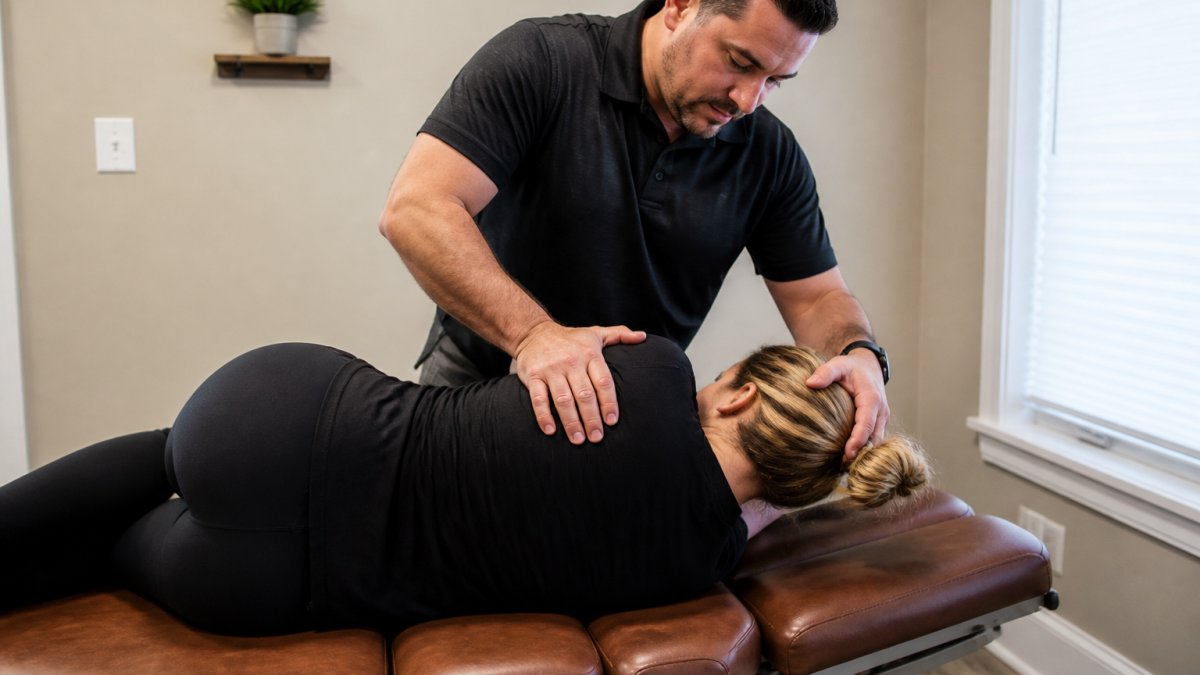
Infographic showing how chiropractic adjustments target disc-related pain in the lower back

For patients who want a dedicated look at how we approach disc-related pain, our herniated disc chiropractor page outlines the treatment offering in detail.

Spinal Manipulation, Joint Mobilization, and Gentler Techniques

Spinal manipulation is a hands-on thrust technique. It is not right for every disc.

Joint mobilization uses slower, low-force technique to move a joint through its range without a thrust.

At Dr Dom, we take a different route again. We do not twist, crack, or apply harsh moves. Instead, we gently reposition spinal bones in the right depth, direction, and sequence, slowly correcting posture and structure while working to eliminate pain.

Is Chiropractic Safe for Degenerative Disc Disease?

Chiropractic care may be appropriate for some patients when a qualified clinician screens first. The risk profile can change with the severity of degeneration, the presence of nerve compression, and the technique chosen. Safety depends on an accurate diagnosis, technique selection matched to that diagnosis, and monitoring of treatment response.

Who Should Avoid Spinal Manipulation

Spinal manipulation is not appropriate for everyone. Absolute contraindications include:

  • Unstable spinal fractures or dislocation
  • Spinal cord compression or cauda equina syndrome (red flags: sudden loss of bladder or bowel control, saddle anesthesia, progressive weakness in both legs)
  • Severe osteoporosis or known bone metastases
  • Active infection or tumor in the spine
  • Significant aortic aneurysm or bleeding disorders

Relative contraindications, where manipulation may be modified or avoided, include severe disc herniation with progressive neurological deficit, inflammatory arthritis (such as rheumatoid arthritis or ankylosing spondylitis) in the cervical spine, and anticoagulant therapy. In these cases, gentle mobilization or other conservative approaches are preferred.

Red Flags Requiring Medical Evaluation

Before any chiropractic treatment, a clinician should screen for red flags that suggest a serious underlying condition. These include:

  • History of cancer or unexplained weight loss (Assessment and Management of Acute Low Back Pain)
  • Fever or recent infection
  • Significant trauma (fall, motor vehicle accident)
  • Progressive neurological symptoms (numbness, weakness, gait disturbance)
  • Bladder or bowel dysfunction
  • Night pain that wakes you from sleep

If any of these are present, chiropractic adjustment should be deferred until medical evaluation is complete. A responsible chiropractor will refer you to an appropriate specialist when red flags are identified.

Technique Selection and Monitoring

Technique selection is a clinical decision that depends on the patient’s presentation and should be discussed with a qualified clinician.

Watch out: if you experience increased pain, numbness, tingling, or weakness after an adjustment, stop treatment and seek evaluation. Worsening neurological symptoms are a sign that the current approach may not be appropriate.

Referral and Shared Decision-Making

A chiropractor should be part of a broader care team when needed. If your condition does not improve within a reasonable timeframe (often 4-6 weeks of consistent care), or if you develop new symptoms, referral to a medical specialist, such as an orthopedic surgeon, neurologist, or physiatrist, is appropriate. Ask your chiropractor about their referral patterns and how they coordinate with other providers. (Source: National Institute of Arthritis and Musculoskeletal and Skin Diseases)

If you have a herniated disc and are weighing whether structural correction is appropriate, read our guidance on how to tell if structural correction is safe for herniated discs before your first visit.

Can a Chiropractor Make Degenerative Disc Disease Worse?

Symptoms can be aggravated if manipulation is applied without proper screening.

It is not, however, an argument against all chiropractic care. It is an argument for clinical assessment, appropriate technique, and a provider who explains what they are doing and why.

If pain, numbness, or weakness worsens after a session, stop and get evaluated.

If adjustments have felt good for a day and then faded, our guide on why chiropractic adjustments don’t last explains the mechanics behind that pattern.

Physical Therapy or Chiropractor for Degenerative Disc Disease

Physical therapy and chiropractic care are not mutually exclusive, and the better question is which one addresses your specific limitation first.

Physical therapy leans on strengthening exercise, core muscles, and graded movement to build stability. Chiropractic care leans on restoring spinal alignment and joint mechanics so that movement is possible without pain. Many patients benefit from both, sequenced intelligently.

If your back pain keeps returning after each course of care, the underlying pattern may not have been corrected. Our article on why your back pain keeps returning covers how to think about that before committing to a provider.

Degenerative Disc Disease Treatment Options Compared

Conservative care comes in several forms, and each has a distinct role. The table below summarizes what to expect from each option, including realistic timelines and measures of progress.

OptionTypical FocusWhat to ExpectBest ForTypical Timeline
Chiropractic adjustmentsSpinal alignment, joint mechanicsImproved motion, reduced painMechanical pain, stiffness2-4 weeks for initial response; 6-8 weeks for functional gains
Joint mobilizationLow-force joint movementGradual mobility gainsSensitive or fragile spines4-6 weeks
Spinal decompressionTraction, disc unloadingReduced nerve pressureRadicular symptoms4-6 weeks, often 2-3 sessions per week
Physical therapyStrengthening, core stabilityBetter endurance, supportLong-term stability6-12 weeks
MedicationSymptom managementShort-term reliefAcute flare-upsDays to weeks

What matters most is matching the option to the diagnosis, then measuring progress rather than assuming it. Ask your provider what their goal is for your treatment, how long it will take, and what you can realistically expect to gain.

Evidence Quality and What Research Can, and Cannot, Show

It is important to distinguish between symptom relief and reversing disc degeneration. Chiropractic adjustments and other conservative treatments may reduce pain and improve function, but they do not regrow a degenerated disc.

A balanced view acknowledges that while many patients experience meaningful relief, the evidence does not support claims that manipulation can “cure” or reverse disc degeneration. Imaging changes often do not correlate with symptoms, so treatment decisions should be based on clinical presentation and functional goals rather than scans alone.

Expected Outcomes and Measures of Progress

Realistic expectations are essential. Rather than promising disc repair or perfect alignment, providers may track functional outcomes such as:

  • Pain intensity (using a 0-10 scale)
  • Mobility (e.g., range of motion, walking distance)
  • Daily activities (e.g., sitting tolerance, ability to perform work or hobbies)
  • Medication use (reduction in reliance on pain relievers)

Questions to Ask a Chiropractor

Shared decision-making starts with asking the right questions. Consider asking:

  • What is your diagnosis, and what specific structures are involved?
  • Which technique will you use, and why is it appropriate for my condition?
  • What are the risks and benefits of this approach for me?
  • How will we measure progress, and when will we reassess?
  • What alternatives exist, and how do they compare?
  • What are your credentials and experience with degenerative disc disease?

A clinician who welcomes these questions and provides clear, evidence-informed answers is likely to be a good partner in your care.

If your back pain keeps returning after each course of care, the underlying pattern may not have been corrected. Our article on why your back pain keeps returning covers how to think about that before committing to a provider.

Book a Consultation With Dr Dom

Choosing a provider is a decision about trust as much as technique. Ask about goals, timelines, and what happens if care is not working.

At Dr Dom, care is individualized and built around Advanced Biostructural Correction™, with home and office visits available.

A common myth is that once you start seeing a chiropractor you have to keep going forever. We do not find that to be true.

If you are ready to arrange a visit, here is how to book a mobile chiropractor in Manhattan.


Chronic disc pain rarely resolves on its own, and guessing at care wastes months you cannot get back.

Frequently Asked Questions

Can chiropractic adjustments help degenerative disc disease?

They can help some people manage symptoms like back pain and stiffness. Gentle spinal manipulation and joint mobilization may improve spinal motion for some people. Results vary with the severity of degeneration and how the body responds. A full clinical assessment should come first.

Is chiropractic care safe for degenerative disc disease?

Chiropractic care may be an option for some people with DDD when a licensed chiropractor screens for red flags first. Safety depends on your history, imaging findings, and the technique chosen. Anyone with severe disc herniation, fracture, infection, or neurological warning signs should get medical clearance before any adjustment.

Can a chiropractor make degenerative disc disease worse?

It is possible if the technique is too forceful or the patient is not properly screened. High-velocity manipulation on an unstable or severely degenerated segment can aggravate nerve irritation or soft tissue. That is why a careful clinical assessment, imaging review, and technique selection matter. Tell your chiropractor about any numbness, weakness, or bowel and bladder changes before treatment.

Is physical therapy or a chiropractor better for degenerative disc disease?

They serve different roles and often work well together. Chiropractic care focuses on spinal alignment, joint mechanics, and pain relief through adjustment and mobilization. Physical therapy emphasizes core strengthening, range of motion, and functional rehabilitation. Many treatment plans combine both. The better choice depends on your symptoms, goals, and how your body responds. Ask each provider what their goal is for your treatment and how progress will be measured.

When should you avoid chiropractic adjustments for back pain?

Avoid adjustments without medical clearance if you have unexplained weight loss, fever, recent trauma, severe osteoporosis, spinal fracture, infection, or progressive neurological symptoms such as leg weakness or loss of bladder control. These are warning signs that need medical evaluation first. If you have had a herniated disc, ask your chiropractor how they will adapt the technique and whether imaging is needed before treatment begins.


How to Fix Chronic Sedentary Back Pain: A Complete Guide

Last Updated: November 8, 2026

Quick Summary

Chronic sedentary back pain is usually fixed by breaking up long periods of sitting, setting up your workstation correctly, and doing core and hip mobility exercises several times a week. Pain that is new, spreads down a leg, or comes with weakness or bladder changes needs urgent medical assessment.

  • Stand, move your hips, and walk for about two minutes every 30 to 45 minutes.
  • Set the top of your monitor at or slightly below eye level, with elbows bent near 90 degrees.
  • Do dead bugs, bird dogs and glute bridges two to three times per week.
  • Track daily pain, sitting tolerance and walking time weekly for four to six weeks.
  • Seek urgent care for bladder or bowel changes, groin numbness or progressive leg weakness.
Is sitting all day wearing down your back?Dr Dom offers individualized chiropractic care in Manhattan, Melville and beyond, with office and home visits.

Book Your Consultation

Table of Contents

Why Sitting All Day Leads to Chronic Back Pain

If you spend most of your working day in a chair and your lower back aches by mid-afternoon, you are far from alone. Our guide on why adjustments don’t last explains the underlying reasons.

The spine is built to move. Discs, ligaments and muscles depend on regular changes in load and position to stay nourished and supple. Sit for hours without shifting and the lower back muscles stay contracted, the hip flexors shorten, and the discs sustain pressure for long periods, producing the dull, persistent ache many people accept as normal.

How inactivity and prolonged sitting load the spine

Prolonged sitting flattens the natural curve of the lower back and pushes the pelvis into a posterior tilt, increasing load on the lumbar discs compared with standing. Stabilizing muscles switch off while others tighten to compensate. The pain is rarely purely muscular; it usually reflects tight hips, weak core muscles and a static posture held for hours.

Lower Back Pain From Sitting: Posture and Workstation Setup

Your desk setup is one of the most overlooked contributors to sitting-related back pain. If posture changes alone haven’t resolved it, see our chiropractic lower back care page.

Office worker sitting with correct posture to prevent sedentary back pain in a bright workspace.

Desk habits play a major role in how long any relief from sitting-related stiffness lasts, so workstation changes are worth considering alongside professional guidance. Read whether posture correction can last in Can a Chiropractor Fix Your Posture for Good?.

Screen height, chair support and feet flat on the floor

Set the top of your monitor at or slightly below eye level so your neck stays neutral. Your elbows should bend at roughly 90 degrees with your wrists straight.

Many people sit with their weight shifted to one side or their legs crossed, which twists the pelvis and loads one side of the lower back more than the other. Sitting evenly on both sit bones reduces that asymmetry.

Personalizing the setup for office, home and hybrid work

Office setups usually offer adjustable chairs and monitors, so the main task is configuring them correctly. Home and hybrid workers often sit on sofas, kitchen chairs or laptops on a bed, the worst posture for the spine.

Because each person’s body and work pattern differs, the ideal setup is individual: leg length, height, typing hours and multiple screens all change what counts as correct. Learn when to see a chiropractor for symptoms like these.

7 Exercises for Lower Back Pain That Build Core and Hip Mobility

Exercise is where lasting relief usually comes from. The right program strengthens the deep trunk muscles, restores hip movement and builds tolerance for sitting. Start with a few repetitions of each movement and stop if you feel sharp pain.

The seven exercises below focus on core stability and hip mobility. Perform them two to three times per week, alongside daily movement breaks.

Core strengthening and trunk stability

  1. Dead bug: Lie on your back with arms reaching toward the ceiling and knees bent at 90 degrees. Slowly extend one arm and the opposite leg while keeping your lower back gently pressed toward the floor. Alternate sides for 8 to 10 repetitions each.
  2. Bird dog: From hands and knees, extend one arm forward and the opposite leg back, keeping the hips level. Hold for three seconds, then switch. Complete 8 to 10 repetitions per side.
  3. Glute bridge: Lie on your back with knees bent, then lift your hips until your body forms a straight line from shoulders to knees. Hold for three seconds and lower slowly. Aim for 10 to 12 repetitions.

These moves train the transverse abdominis and multifidus, the muscles that stabilize the spine, reducing the load sitting places on the lower back.

Hip mobility for tight muscles

  1. Hip flexor stretch: Kneel on one knee with the other foot forward. Gently shift your hips forward until you feel a stretch at the front of the hip, keeping your torso upright. Hold for 30 seconds per side.
  2. 90/90 hip rotation: Sit on the floor with both knees bent at 90 degrees, one in front and one to the side. Keeping your back tall, lean forward slowly over the front leg. Hold for 20 to 30 seconds, then switch.
  3. Cat-cow: On hands and knees, alternate between arching and rounding your back with slow breathing. Repeat for 8 to 10 cycles to restore spinal mobility.
  4. Child’s pose: Sit back on your heels with arms stretched forward and forehead resting on the floor. Hold for 30 to 60 seconds to ease tension through the lower back and hips.

Hip mobility matters because tight hip flexors pull the pelvis forward and increase strain on the lumbar spine.

The seven exercises below build core stability and hip mobility, with suggested reps or hold times.

ExerciseTargetReps or hold
Dead bugCore stability8-10 reps per side
Bird dogTrunk stability8-10 reps per side
Glute bridgeCore and glutes10-12 reps
Hip flexor stretchHip flexors30 seconds per side
90/90 hip rotationHip mobility20-30 seconds per side
Cat-cowSpinal mobility8-10 cycles
Child’s poseLower back and hips30-60 seconds

Back Stretches for Sitting All Day and Movement Breaks

Even with good posture and strong muscles, sitting for long periods will cause stiffness unless you interrupt it. The goal is not to stretch once a day but to move regularly throughout the workday. What separates a movement-break habit that sticks from one that fades is specificity: knowing exactly what to do, how long, and how to adapt when your back is flaring.

A concrete movement-break protocol

Set a reminder to stand, walk or stretch every 30 to 45 minutes.

Use this simple three-part break structure so you are not deciding what to do in the moment: (Source: Occupational Safety and Health Administration (OSHA) guidelines for ergonomic workstations)

  1. Stand and reset (20 seconds): Stand up, place your hands on your hips, and gently extend your lower back by leaning back a few degrees. Take three slow breaths. This reverses the flexed position your spine has held in the chair.
  2. Move the hips (40 seconds): Perform five standing hip hinges (push your hips back as if closing a drawer, keep your chest tall) and five slow standing side bends to each side. These target the hip flexors and lateral trunk that stiffen most during sitting.
  3. Walk (60 seconds): Walk to a water fountain, the mailbox, or simply down the hallway and back. Walking restores circulation to the discs and re-engages the gluteal and trunk muscles that switch off in a chair.

Repeat this cycle two to three times per workday in addition to your exercise sessions. Frequency matters more than duration: three two-minute breaks spread across the day outperform one 15-minute stretch session for sitting-related stiffness.

Stretches that pair with movement breaks

Keep stretches gentle. Hold each position for 20 to 30 seconds without bouncing, and breathe slowly. If a stretch increases numbness, tingling or sharp pain, stop and seek professional advice.

  • Standing hip flexor stretch: Step one foot forward into a short lunge, tuck your pelvis slightly, and shift your weight forward until you feel a stretch at the front of the rear hip. Hold 30 seconds per side. This stretch targets the hip flexors, which can feel tight after long periods of sitting.
  • Seated spinal twist: Sit tall, cross one leg over the other, and rotate your torso toward the crossed leg, using the chair back for gentle leverage. Hold 20 to 30 seconds per side.
  • Standing side bend: Reach one arm overhead and lean gently to the opposite side, feeling a stretch along your side and lower back. Hold 20 seconds per side.

Adapting movement breaks during a flare

When pain is flaring, do not abandon movement entirely, but scale it back. Shorten the walk to 30 seconds and perform only the standing reset and gentle hip hinges, avoiding stretches that provoke symptoms. Keep moving in a range that does not increase pain, then rebuild as symptoms settle.

Watch out: If a movement break consistently produces sharp pain, numbness, or pain that radiates below the knee, stop that movement and note which one triggered it. Tracking which movements trigger symptoms can help guide a broader plan for managing persistent back pain, including approaches discussed by C3 Wellness Spa.

When Does Back Pain Become Chronic, and When to Seek Urgent Care

Back pain is generally considered chronic when it persists for more than three months, though many people with ongoing sitting-related discomfort have pain that cycles in and out for years. Pain that keeps returning despite self-care is a reason to seek a professional assessment rather than wait. Our article on why back pain keeps returning covers recurrence in more detail. Knowing the difference between routine chronic discomfort and symptoms that need prompt medical attention helps you act appropriately.

Routine chronic pain versus urgent symptoms

Most sedentary back pain is mechanical: it worsens with prolonged sitting or certain movements and eases with position changes, walking, or rest. That pattern suits self-management and gradual exercise progression.

Seek urgent care or emergency evaluation if you experience any of the following:

  • Loss of bladder or bowel control, or new difficulty urinating, especially alongside back pain or leg weakness. This can indicate cauda equina syndrome, a rare but time-sensitive condition.
  • Numbness in the groin or inner thighs (sometimes called saddle anesthesia), which is another red flag for the same condition.
  • Progressive weakness in one or both legs, such as difficulty lifting your foot or rising from a chair, that is new or worsening.

These signs can indicate a serious condition and should not be managed at home. For ongoing but non-emergency pain, an evaluation can clarify whether structural, muscular or lifestyle factors are driving your symptoms.

When to see a professional for non-urgent chronic pain

If your pain has persisted beyond six to eight weeks despite consistent movement breaks, workstation changes and the exercises in this guide, or if it interferes with sleep, work or daily activities, a structured assessment is reasonable. A focused evaluation helps distinguish mechanical patterns that respond to exercise and posture changes from other contributors that need a different approach.

Evidence-based expectations and timelines

Realistic expectations matter for both safety and motivation. Recovery timelines vary between individuals. Exercise and activity changes may reduce pain for some people, and setbacks can occur during recovery.

Track three measures weekly: your average pain interference (how much pain limits daily activities, rated 0 to 10), your sitting tolerance (how long you can sit before symptoms force a break), and your walking time or step count. Improvement in any one over four to six weeks suggests your changes are helping. If none improve after that period, or symptoms worsen, reassess with a professional rather than continuing the same plan.

Watch out: Do not use the presence of chronic pain as a reason to delay evaluation of a new or different symptom, such as leg weakness, numbness, or pain that has changed character.

A Progressive Plan to Return to Activity and Track Your Progress

Lasting recovery is gradual. A practical plan has three stages. In the first two weeks, focus on short walks, daily movement breaks and the simplest exercises, such as the glute bridge and cat-cow, to reduce irritation.

Track your progress with a simple log: daily pain on a scale of 0 to 10, hours sat, movement breaks taken and exercises completed. Review it weekly.

Booking Your Consultation With Dr Dom

If your back pain keeps returning despite changes to your workstation and routine, a structured assessment can identify what is driving it. Dr Dom, led by Dr. Dominick Fazzari, offers individualized care, with office and home visits in New York City, Long Island and Connecticut.

To discuss your symptoms and find out whether this approach fits your needs, book an appointment today and take the first step toward lasting relief.

Frequently Asked Questions

How can I live with chronic back pain?

Chronic back pain is usually managed rather than cured in one step. Keep moving through the day, break up long periods of sitting, and build a regular exercise routine that you can sustain. Sleep, stress and weight all influence how the pain behaves, so address them alongside movement. Track which activities trigger flare-ups and which ease them, and adjust gradually. If pain limits your work or sleep for several weeks, arrange a consultation with a qualified health professional to review your options and a plan that fits your situation.

What could be causing my lower back pain when I sit but not stand?

Pain that appears mainly while sitting often relates to posture, sustained spinal flexion, tight hip flexors, or a chair and desk setup that places extra load on the lower back. Sitting for long periods also reduces movement, which can make the muscles that support the spine stiffer and less conditioned. Changes in posture, frequent movement breaks and targeted stretching often help. Because the cause varies between people, a professional assessment is the best way to identify the source of your symptoms.

When does back pain become chronic?

Back pain is generally described as chronic when it persists for longer than about three months, though it can also be considered chronic when it keeps returning over an extended period. Pain that recurs frequently, lasts through daily routines, or disrupts work and sleep deserves attention. Persistent pain should be reviewed by a qualified professional, particularly if it is getting worse or is accompanied by new symptoms.

How often should I get up and move if I sit all day?

Many people find it helpful to stand, walk or change position every 30 to 60 minutes while sitting. Short movement breaks of a few minutes can reduce stiffness and make it easier to maintain a comfortable posture. A simple approach is to set a timer, stand to refill water or take a brief walk, and perform a few gentle stretches before returning to your desk. Consistency matters more than perfect timing.

When should I see a health care professional for persistent back pain?

Seek prompt medical care if back pain follows an injury, is accompanied by numbness, weakness, tingling in the legs, loss of bladder or bowel control, fever, or unexplained weight loss. These red flags require urgent evaluation. For ongoing pain that does not improve after several weeks of self-care, a consultation with a licensed professional can help determine the cause and appropriate options. Dr Dom offers consultations, and you can book an appointment through the website.

Chiropractic Care for Repetitive Strain Injury

Table of Contents

Last Updated: October 21, 2026

What Is Repetitive Strain Injury and Why It Matters

Repetitive strain injury, often called RSI or repetitive stress disorder, develops when you perform the same motion repeatedly over time, fatiguing and irritating your muscles, tendons, and nerves. Unlike an acute injury from a single incident, RSI builds gradually as damage accumulates with each repetition until pain and dysfunction emerge.

Office professionals, construction workers, athletes, and healthcare staff face the highest risk. Anyone whose work demands repetitive tasks, typing, gripping, lifting, or reaching, can develop RSI. The condition affects your wrists, shoulders, neck, elbows, and lower back depending on which movements dominate your routine.

At Dr Dom, we’ve assessed thousands of satisfied patients whose repetitive strain injuries stemmed from poor posture, inadequate ergonomics, or movement patterns that placed excessive load on specific joints. The problem isn’t always the activity itself but how your body performs it. When your spine lacks proper alignment, your joints move inefficiently and muscles compensate by working harder, creating pain, weakness, and reduced mobility over weeks and months.

The good news: repetitive strain injury responds well to targeted intervention. Many assume RSI is permanent or requires surgery, but addressing underlying movement patterns and structural alignment often reverses symptoms, and early intervention prevents progression to more serious conditions.

Key Takeaway
Repetitive strain injury develops from accumulated stress on muscles and joints during repetitive tasks. The underlying cause is usually poor posture, misalignment, or inefficient movement patterns, not the activity itself.

Work-related repetitive motion injury announces itself through specific warning signs.

Weakness accompanies pain. Your grip strength declines, lifting becomes difficult, and you drop things you previously handled easily.

Numbness and tingling are red flags. These sensations indicate nerve involvement. You might feel pins and needles in your fingers, hand, or forearm. Some patients report numbness that wakes them at night. This suggests significant nerve compression requiring prompt attention.

Reduced range of motion develops as muscles tighten and inflammation builds. Turning your head becomes stiff. Reaching overhead grows uncomfortable. Your shoulder, wrist, or elbow feels locked in certain positions.

Swelling and inflammation may appear: your wrist, hand, or shoulder visibly puffs and feels warm to the touch. Inflammation is your body’s response to repeated microtrauma, and while protective initially, chronic inflammation perpetuates pain and dysfunction.

The mistake most people make: they ignore early warning signs. A minor ache seems manageable, so you work through it, and the underlying damage accelerates. Early assessment matters: identifying repetitive strain injury before it becomes severe prevents long-term complications.

Watch Out
Numbness, tingling, or weakness that radiates down your arm or hand may indicate nerve compression. If these symptoms persist beyond a few days or worsen despite rest, seek professional evaluation promptly. Delayed treatment of nerve compression can cause permanent damage.

How Chiropractic Care Addresses Repetitive Strain Injury at Its Source

Chiropractic care for repetitive strain injury focuses on restoring proper alignment and movement efficiency. Rather than treating pain as an isolated symptom, we identify why the injury developed in the first place.

The conventional approach often relies on pain management, ice, anti-inflammatory medication, rest. These provide temporary relief but don’t address the structural or movement issues driving the problem. Pain returns when you resume activity because the underlying cause remains unresolved.

Chiropractic care for repetitive strain injury works differently. We assess your posture, spinal alignment, and movement patterns, examining how your joints move and identifying restrictions, compensations, and imbalances. This comprehensive evaluation reveals the root cause, usually a combination of postural distortion, joint misalignment, and inefficient movement patterns.

Advanced Biostructural Correction™ (ABC), the specialized technique Dr Dom uses, targets the specific structural distortions contributing to your repetitive strain injury. Rather than generic adjustments, ABC identifies your unique structural patterns and corrects them systematically, producing lasting results because it addresses why your body developed the problem.

Spinal Alignment and Nerve Irritation

When vertebrae misalign, they compress or irritate nerves, which send pain signals and reduce the strength of muscles they supply, causing radiating pain, numbness, or weakness. Restoring proper spinal alignment removes this compression, so nerves recover function and pain diminishes as strength returns.

Spinal misalignment also disrupts communication between your brain and the muscles performing repetitive tasks. Your nervous system cannot coordinate movement efficiently, so muscles work against each other instead of in harmony, creating the muscle tension and fatigue characteristic of repetitive strain injury.

Chiropractic adjustment realigns vertebrae, restoring normal nerve function. As alignment improves, your nervous system regains the ability to coordinate movement precisely. Muscles work more efficiently. Fatigue decreases. Pain resolves because the underlying nerve irritation has been eliminated.

The alignment of your cervical spine (neck) particularly influences repetitive strain in your upper extremities. Forward head posture, common in office workers, stretches nerves and muscles in your neck and shoulders. This creates a cascade of compensation patterns down your arms. Correcting cervical alignment stops this cascade at its source.

Soft-Tissue Therapy and Muscle Tension Relief

Muscles surrounding misaligned joints become chronically tight, contracting to stabilize the unstable joint. This tension creates pain, restricts motion, and accelerates fatigue during repetitive tasks, and soft-tissue therapy releases it.

Techniques like massage, myofascial release, and trigger-point therapy address muscle tightness directly. These therapies improve blood flow to affected tissues. Increased circulation delivers oxygen and nutrients, accelerating healing. Tension dissipates. Range of motion improves. Pain decreases.

Soft-tissue therapy combined with chiropractic adjustment produces superior results compared to either approach alone. Adjustments restore alignment. Soft-tissue work releases the muscular compensation patterns that developed around the misalignment. Together, they create an environment where your body can heal completely.

Many patients with repetitive strain injury have developed scar tissue within muscles and fascia from months or years of tension and microtrauma. Soft-tissue therapy breaks down scar tissue, restoring normal tissue elasticity. This prevents the repetitive strain injury from recurring when you return to your normal activities. Maintaining this newfound suppleness requires consistent ergonomic adjustments and targeted tension relief solutions that you can integrate into your daily workspace routine.

Pro Tip
Soft-tissue therapy is most effective when combined with postural correction and ergonomic changes. Releasing muscle tension without addressing the underlying movement patterns often provides only temporary relief.
::: (Source: National Institute of Neurological Disorders and Stroke (NINDS) information on nerve compression)

Ergonomic Workspace Setup Tips to Prevent Recurrence

Ergonomic modifications are essential to prevent your repetitive strain injury from returning. Even perfect chiropractic care cannot overcome a workspace that forces poor posture and inefficient movement.

Professional sitting at an ergonomic desk with ideal posture to support chiropractic care for repetitive strain injury

Your monitor should sit at eye level, approximately 20-26 inches from your eyes. The top of the screen aligns with your eyes when you look straight ahead.

BOOK AN APPOINTMENT →

Your keyboard and mouse should be positioned so your elbows bend at approximately 90 degrees. Your wrists remain neutral, not bent upward, downward, or to the sides.

Your chair must support the natural curve of your spine, and lumbar support is critical. Without it, your lower back rounds forward, compressing discs and irritating nerves.

Take frequent breaks. Stand and move every 30-45 minutes. Prolonged static posture, even perfect posture, creates problems.

Ergonomic ElementCorrect PositionCommon Mistake
Monitor heightTop of screen at eye level, 20-26 inches awayToo low, forcing forward head posture
Keyboard/mouseElbows at 90 degrees, wrists neutralWrists bent or elevated, causing nerve compression
Chair supportLumbar curve supported, hips slightly above kneesNo lumbar support, lower back rounded
Break frequencyMovement every 30-45 minutesSitting continuously for hours
LightingNatural or diffuse artificial light, no glareBright overhead lights causing neck strain

Lighting matters more than most people realize. Poor lighting forces you to crane your neck or lean forward to see clearly. This creates postural strain.

If your job requires frequent phone use, use a headset rather than cradling the phone between your ear and shoulder. Shoulder cradle creates severe neck and shoulder strain.

What to Expect: Chiropractic Adjustment Recovery Time and Progress

Recovery from repetitive strain injury varies based on severity and how long the condition has been present.

Your first appointment involves a thorough assessment. We evaluate your posture, spinal alignment, movement patterns, and joint function, identify restrictions and compensations, and perform orthopedic and neurological tests to assess nerve function.

Initial treatment sessions may produce soreness similar to mild muscle soreness after exercise. This is normal as your muscles adapt to improved alignment and movement patterns, typically resolving within 24-48 hours. Ice can help manage any discomfort.

Most patients notice initial improvement within 1-2 weeks: pain decreases, range of motion improves, and strength begins returning. However, early improvement doesn’t mean the underlying problem has been fully corrected, so consistent care for the full treatment duration ensures lasting results.

Progress plateaus are common. You might improve significantly for 2-3 weeks, then notice no additional improvement for a week. This doesn’t indicate treatment failure. Plateaus reflect your body’s adaptation process. Continuing care breaks through plateaus.

Home exercises and stretches accelerate recovery. We provide specific exercises targeting your particular restrictions. Performing these daily reinforces the corrections we make during appointments and prevents regression between sessions.

When to Seek Medical Evaluation Beyond Chiropractic Care

Certain symptoms warrant evaluation by a physician or specialist before or alongside chiropractic care. Knowing when to seek additional evaluation protects you from complications.

Severe pain that doesn’t improve with rest suggests a more serious underlying condition. Fractures, significant nerve compression, or disc herniation require imaging and possibly medical intervention.

Rapidly progressive weakness indicates significant nerve compression. If your grip strength deteriorates over days or your hand becomes noticeably weaker, seek immediate medical evaluation. Progressive neurological deficit can indicate a serious condition requiring urgent attention.

Numbness that spreads or involves multiple areas of your body suggests systemic involvement.

Symptoms that don’t improve after 4-6 weeks of appropriate care warrant reassessment. We may recommend imaging to identify structural issues we cannot detect through physical examination.

History of significant trauma, car accident, fall, or major injury, complicates assessment. Even if the trauma occurred years ago, residual structural damage can predispose you to repetitive strain injury. Medical imaging helps identify any underlying structural issues.

Red-flag symptoms requiring immediate medical attention include sudden severe pain, loss of bowel or bladder control, severe neurological changes, or unexplained fever. These suggest serious conditions requiring emergency evaluation.

If you experience sudden loss of bowel or bladder control, severe progressive weakness, or unexplained fever alongside your repetitive strain injury symptoms, seek immediate medical evaluation. These may indicate serious conditions requiring urgent intervention.


Repetitive strain injury develops from accumulated stress on structures performing repetitive tasks. With over 25 years of experience helping patients eliminate stubborn pain and restore mobility, Dr Dom provides the individualized assessment and targeted treatment that produces lasting results. BOOK AN APPOINTMENT with Dr Dom and discover how structural correction can resolve your repetitive strain injury.

Frequently Asked Questions

How is Advanced Biostructural Correction different from traditional chiropractic care for repetitive strain injury?

Advanced Biostructural Correction™ (ABC) focuses on full-body structural alignment rather than isolated adjustments. While traditional chiropractic care may provide temporary relief through spinal manipulation, ABC addresses underlying postural imbalances and movement patterns that contribute to repetitive strain injury. This comprehensive approach targets the root causes of nerve irritation and muscle tension, leading to more lasting results and reduced recurrence of symptoms.

Can chiropractic care fully resolve repetitive strain injury, or is it just temporary relief?

Chiropractic care can provide significant relief and help restore function for many people with repetitive strain injury, especially when combined with ergonomic changes and activity modification. However, outcomes depend on the severity of the condition, how long symptoms have persisted, and your commitment to preventing recurrence. A chiropractor can assess your specific situation during a consultation and discuss realistic expectations for your recovery.

What are red-flag symptoms that mean I should see a doctor instead of a chiropractor for my repetitive strain injury?

Seek medical evaluation if you experience sudden severe pain, numbness or tingling that doesn’t improve, loss of grip strength, signs of infection, or symptoms that worsen despite treatment. If you have a history of herniated discs, spinal fractures, or other serious conditions, consult your physician before starting chiropractic care. A qualified chiropractor will also recommend medical referral if findings suggest a condition outside their scope of practice.

How many chiropractic sessions does it typically take to feel relief from repetitive strain injury symptoms?

Recovery timelines vary widely based on the severity of your condition, how long you’ve had symptoms, and how well you follow ergonomic and activity modifications. Some people notice improvement within a few sessions, while others require several weeks of consistent care. Your chiropractor will develop a personalized care plan with progress measures and adjust treatment as needed. Pricing and session frequency depend on your individual needs, contact Dr Dom for a consultation to discuss your specific situation.

How Advanced Biostructural Correction Works: A Complete Guide

Table of Contents

Last Updated: October 18, 2026

What Advanced Biostructural Correction Is

Advanced Biostructural Correction, commonly called ABC, is a chiropractic methodology that restores full-body structural alignment through a systematic sequence of low-velocity, high-amplitude adjustments and soft tissue work. Unlike traditional chiropractic, which often treats isolated areas of pain, ABC targets the entire skeletal and soft tissue system to correct underlying mechanical dysfunction.

The core principle behind advanced biostructural correction is that many chronic pain conditions stem from cumulative structural misalignment, particularly in the spine, ribs, and supporting soft tissues.

The technique follows a specific correction sequence designed to work predictably through the body’s structural hierarchy, unlike traditional chiropractic’s focus on symptomatic relief through isolated adjustments. We approach ABC as a full-body structural restoration process rather than a symptom-management tool.

Pro TipThe key distinction: ABC treats structure first, with symptom relief as a secondary outcome. This means your initial appointments focus on assessment and foundational corrections, not immediate pain reduction.

How the ABC Technique Works: The Correction Sequence

Advanced biostructural correction operates through a methodical progression of adjustments and releases that address structural dysfunction from the foundation upward. The technique relies on understanding how misaligned bones, restricted soft tissues, and mechanical tension in the spinal cord and meninges (the membrane surrounding the spinal cord) interact to create pain and dysfunction.

The correction sequence begins with assessment of your entire skeletal structure, not just where you feel pain. An ABC-trained practitioner evaluates spinal alignment, rib positioning, pelvic balance, and overall body mechanics to determine where corrections should begin and in what sequence they should progress.

Initial Assessment and Structural Analysis

Your first ABC appointment involves detailed structural evaluation. The practitioner examines your spine, skeletal alignment, posture, and movement to identify distortions driving your symptoms, many of which may not be where you feel pain.

The practitioner looks for specific misalignments: vertebral subluxations (partial dislocations), rib restrictions, pelvic tilts, and how these affect overall body mechanics, mapping your structural dysfunction so corrections follow a logical, predictable sequence.

This analysis is critical because advanced biostructural correction assumes correcting the primary structural fault will cascade into corrections throughout your system.

Key TakeawayStructural assessment in ABC is comprehensive, practitioners evaluate your entire skeletal system, not just the area causing pain. This prevents treating symptoms while missing the underlying structural driver.

The Role of Meningeal Releases and Soft Tissue Work

Meningeal releases represent a distinctive component of advanced biostructural correction. The meninges are the connective tissue membranes surrounding your spinal cord. When vertebrae misalign or soft tissues become restricted, the meninges can experience mechanical tension, potentially affecting nerve function and spinal cord mobility.

ABC practitioners use gentle, targeted stretching and mobilization to release this meningeal tension and restore the spinal cord’s ability to move freely within its protective covering. This work is often paired with soft tissue techniques addressing muscle restrictions, fascia tightness, and tissue adhesions that limit structural mobility.

The soft tissue component includes targeted stretching, tissue mobilization, and sometimes gentle manipulation of muscles and connective tissue that have adapted to your misalignment.

Bone Alignment and Specific Adjustments

Once soft tissues and meningeal tension are addressed, ABC practitioners perform specific adjustments to restore bone alignment.

Each adjustment targets a precise vertebral misalignment identified during your structural assessment, moving the bone back toward its correct anatomical position to reduce mechanical stress on surrounding nerves, blood vessels, and soft tissues.

Advanced biostructural correction emphasizes that bone alignment must be maintained by addressing the soft tissues and movement patterns that created the misalignment.

Diagram showing the advanced biostructural correction sequence for neck and upper back spinal adjustments

What to Expect During a Chiropractic Adjustment with ABC

An ABC appointment differs substantially from traditional chiropractic visits.

During the adjustment phase, you’ll experience soft tissue work, meningeal release techniques, and specific bone adjustments. Soft tissue work may involve stretching, mobilization, or gentle pressure on restricted areas; meningeal releases often feel like gentle, sustained stretching in your neck or lower back; and bone adjustments are typically low-velocity but involve noticeable movement and positioning changes.

Most patients report ABC adjustments feel more methodical than traditional chiropractic, with less sudden “cracking” and more deliberate repositioning. Sessions typically last 30-60 minutes depending on how much structural work your body requires.

After your adjustment, you may feel immediate relief, mild soreness, or structural “unwinding” as your body adapts. Some patients experience what practitioners call an “unwind”, a temporary increase in sensation or mild discomfort as the nervous system recalibrates, which typically resolves within 24-48 hours.

Watch OutExpect some initial soreness or adjustment reactions, particularly in your first 2-3 sessions. This is normal as your body adapts to corrected alignment. If soreness persists beyond 48 hours or worsens, contact your practitioner immediately.

ABC Chiropractic Benefits: Alignment, Posture, and Nervous System Freedom

Practitioners and patients report that advanced biostructural correction produces benefits beyond pain relief.

Many patients report improved respiratory function after ABC treatment, particularly those with first-rib restrictions or upper-back misalignments. Correcting these distortions improves airway space and makes breathing easier, which often translates to increased energy levels throughout the day.

“Nervous system freedom” is central to ABC philosophy.

Restoration of full mobility represents another commonly reported benefit. As structural alignment improves and soft tissues release, your range of motion typically increases. Activities that felt restricted or painful often become easier and more comfortable.

Advanced Biostructural Correction Evidence: What Research Shows

The evidence base for advanced biostructural correction remains limited compared to traditional chiropractic or conventional medical treatments.

This doesn’t mean ABC is ineffective, it means the research foundation is still developing.

When evaluating ABC, distinguish between the underlying mechanisms (spinal alignment affecting nerve function), which have broader research support, and the specific ABC methodology itself, which has limited independent validation.

BOOK AN APPOINTMENT →

Patients considering ABC should ask their practitioner about their clinical outcomes, how they measure patient progress, and what realistic timelines they’ve observed with similar conditions.

The American Chiropractic Association’s clinical guidelines outline evidence standards for chiropractic care and may help you evaluate what constitutes meaningful evidence for any chiropractic approach.

ABC vs Activator Method: How They Differ

The Activator Method and advanced biostructural correction represent two distinct chiropractic approaches, though both emphasize systematic, specific adjustments rather than general manipulation.

The Activator Method uses a handheld mechanical instrument delivering precise, controlled impulses to specific vertebrae, applying consistent force without the variability of manual adjustments.

Advanced biostructural correction, by contrast, emphasizes comprehensive structural assessment and systematic correction of the entire skeletal system, incorporating significant soft tissue work, meningeal releases, and attention to how all body structures interrelate.

The Activator Method works well for patients who prefer instrument-based adjustments or who have conditions where manual manipulation feels uncomfortable. ABC appeals to patients seeking comprehensive structural restoration and those willing to invest more time in the correction process.

Aspect

Activator Method

Advanced Biostructural Correction

Primary Tool

Handheld mechanical instrument

Manual adjustments and soft tissue work

Session Duration

15-20 minutes

30-60 minutes

Scope

Isolated vertebral corrections

Full-body structural integration

Soft Tissue Work

Minimal

Extensive

Meningeal Focus

Not emphasized

Central to methodology

Best For

Patients preferring instrument-based care

Those seeking comprehensive structural restoration

Who Is a Good Candidate for Advanced Biostructural Correction

Advanced biostructural correction works best for patients with chronic musculoskeletal issues that have resisted traditional treatment. If conventional chiropractic, physical therapy, or medical treatments haven’t provided sustained relief, ABC may offer a different structural perspective worth exploring.

Ideal candidates typically have structural misalignments contributing to symptoms such as chronic neck pain, lower back pain, postural dysfunction, or movement restrictions. Athletes and active individuals seeking structural optimization for performance often respond well to ABC’s systematic approach.

However, ABC may not be appropriate for everyone.

The best way to determine candidacy is a consultation with a qualified ABC practitioner, who can assess your condition, explain whether ABC addresses your structural issues, and discuss realistic outcomes.

Best ForChronic pain sufferers who’ve tried traditional approaches without lasting relief, athletes seeking structural optimization, office workers with postural dysfunction, individuals with scoliosis or degenerative disc issues seeking non-invasive management.

Risks, Contraindications, and Safety Considerations

Like all chiropractic care, advanced biostructural correction carries risks that deserve honest discussion.

More serious risks, while rare, include nerve irritation, disc herniation, or vascular complications from spinal manipulation.

Pregnancy requires special consideration.

Recent spinal surgery, acute inflammation, or undiagnosed neurological symptoms warrant medical evaluation before ABC treatment.

Informed consent matters. Before beginning ABC, you should understand the proposed treatment plan, realistic outcomes, potential risks, and alternatives; a practitioner who rushes this discussion or guarantees specific outcomes raises legitimate concerns.

The relationship between your primary care physician and your ABC practitioner matters. Ideally, these providers communicate about your care.

The American Medical Association’s guidance on chiropractic care safety provides additional perspective on risk assessment for spinal manipulation.


Advanced biostructural correction represents a systematic approach to structural restoration that differs meaningfully from traditional chiropractic care. If you’ve struggled with chronic pain or structural dysfunction, a consultation with Dr Dom can help determine whether advanced biostructural correction addresses your underlying structural issues. Current clinical standards for chiropractic practice outline what to expect from qualified practitioners.

Frequently Asked Questions

What is Advanced Biostructural Correction and how does it differ from traditional chiropractic?

Advanced Biostructural Correction (ABC) is a structural alignment technique that focuses on correcting bone position, releasing soft tissues, and reducing mechanical tension on the nervous system. Unlike traditional chiropractic, which often addresses isolated joint dysfunction, ABC uses a systematic correction sequence targeting the entire skeletal structure. The approach emphasizes meningeal releases and specific low-velocity adjustments designed to create lasting alignment changes rather than temporary relief.

What should I expect during an Advanced Biostructural Correction session?

Your first session typically includes a detailed structural assessment to identify misalignments and areas of mechanical tension. The practitioner will perform targeted adjustments using specific techniques tailored to your body’s needs. Sessions may involve soft tissue work, meningeal releases, and bone realignment adjustments. Most patients experience the process as hands-on and methodical, with the practitioner explaining each step. Follow-up sessions build on previous corrections as your body gradually restabilizes in proper alignment.

Is there scientific evidence supporting Advanced Biostructural Correction?

ABC is based on principles of structural biomechanics and nervous system function, though independent peer-reviewed research on the ABC method specifically is limited. Some concepts underlying ABC, such as the relationship between spinal alignment and nerve function, align with established chiropractic and orthopedic principles. Practitioners report consistent clinical outcomes, but prospective patients should discuss the current evidence base with their provider and understand that outcomes vary individually. Consulting with a qualified practitioner can help you determine if ABC is appropriate for your condition.

How does ABC differ from the Activator Method?

The Activator Method uses a handheld spring-loaded instrument to deliver rapid, high-amplitude impulses to specific joints, focusing on isolated adjustments. Advanced Biostructural Correction, by contrast, uses hands-on, low-velocity techniques and emphasizes soft tissue work and meningeal releases alongside bone alignment. ABC aims to address the entire structural system and reduce mechanical tension on nerves, while the Activator Method targets individual joint restrictions. The choice between them depends on your condition, preferences, and practitioner expertise.

What are the main benefits of Advanced Biostructural Correction?

Patients often report improved spinal alignment, reduced chronic pain, better posture, enhanced mobility, and improved respiratory function. By freeing the nervous system from mechanical tension, ABC may support better overall body function. Many people experience relief from stubborn pain that didn’t respond to other treatments. Benefits typically develop over multiple sessions as structural corrections stabilize and your body adapts to proper alignment.

Am I a good candidate for Advanced Biostructural Correction if I have degenerative discs or scoliosis?

Many people with degenerative disc disease or scoliosis can benefit from ABC, but candidacy depends on your specific condition and medical history. Structural correction may help reduce mechanical stress on affected areas and improve overall alignment. However, certain conditions require careful assessment before beginning treatment. A consultation with a qualified ABC practitioner will determine whether this approach is appropriate for you and identify any contraindications or necessary precautions.

Why do adjustments from traditional chiropractors sometimes not stick, and how does ABC create longer-lasting results?

Traditional adjustments often address isolated joint dysfunction without correcting underlying structural imbalances. When the broader skeletal system remains misaligned, joints may return to their original position. Advanced Biostructural Correction works systematically to realign the entire structure and release soft tissue restrictions that hold misalignments in place. By addressing root structural causes rather than symptoms alone, ABC aims to create stable, lasting corrections. Results depend on consistency, body mechanics, and individual healing capacity.

Hi, How Can We Help You?