
Last Updated: October 26, 2026
Quick Summary
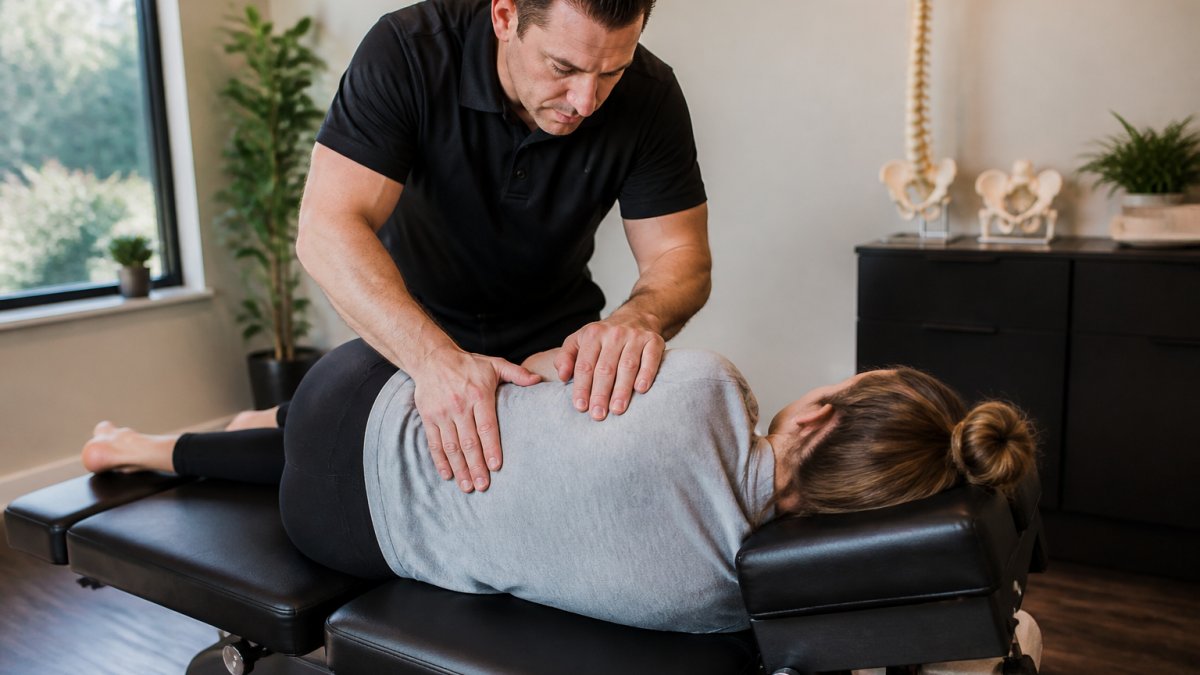
Structural correction is safe for many herniated discs when a trained provider screens carefully and uses low-force techniques. It uses gentle, low-force adjustments rather than high-velocity thrusts, reducing stress on an irritated disc and nerve. Safety must be established case by case through screening, technique selection, and monitoring.
- Structural correction uses gentle, low-force adjustments, while high-velocity manipulation uses a fast, firm thrust.
- Most adverse events are mild, like soreness lasting 24 to 48 hours or temporary stiffness.
- Seek urgent care for red flags such as loss of bladder or bowel control or groin numbness.
- Agree on a review point before starting care and track pain, movement, and daily tasks.
- Dr. Dominick Fazzari brings over 35 years in private practice and focuses on Advanced Biostructural Correction.
Table of Contents
- What Structural Correction Actually Does to a Herniated Disc
- Is Chiropractic Safe for Herniated Discs? What the Evidence Shows
- Spinal Manipulation Risks for Herniated Disc: What Can Go Wrong
- Herniated Disc Red Flag Symptoms That Mean Stop and See a Doctor
- Step-by-Step: Screening Yourself Before Any Structural Correction
- Questions to Ask a Chiropractor About a Herniated Disc
- Setting Stopping Rules and Measuring Your Own Response
- Booking a Herniated Disc Assessment With Dr. Dom
- Frequently Asked Questions
What Structural Correction Actually Does to a Herniated Disc
Is structural correction safe for herniated discs? For many patients, yes, when a trained provider screens carefully and uses low-force techniques.
A herniated disc happens when a disc’s soft inner material pushes through its outer ring and can press on nearby nerves, causing back pain, sciatica, and radiating pain.
The key point most guides miss: structural correction is not the same as a standard spinal adjustment. The technique, force used, and safety profile all differ.
Structural Correction vs. High-Velocity Spinal Manipulation
High-velocity spinal manipulation uses a fast, firm thrust to move a joint, often producing a popping sound.
That difference matters for a herniated disc. Less force means less stress on an already irritated disc and nerve.
You can see the full range of techniques we offer on our services page to understand how structural correction fits alongside other care.
Is Chiropractic Safe for Herniated Discs? What the Evidence Shows
Most ranking articles answer a broader question, whether chiropractic care in general is safe for a herniated disc, and stop at ‘it depends.’ The honest answer separates what research shows about high-velocity spinal manipulation from what it shows about low-force, whole-body approaches, and is clear about the limits of each.
What the research on spinal manipulation actually shows
The largest body of evidence concerns spinal manipulation for low back pain generally, not for confirmed disc herniation specifically. Systematic reviews and clinical practice guidelines, including the American College of Physicians low back pain guideline, support conservative, non-surgical care as a first step for most people with acute or chronic low back pain. That is a meaningful signal, but it is not the same as proof that manipulation repairs a herniated disc or reliably resolves nerve compression.
A few patterns are consistent across the literature:
- Short-term symptom relief is plausible for some patients. Many report reduced pain and improved function after gentle manual care, especially combined with exercise and education rather than used alone.
- Serious adverse events are rare but not zero. Most reported issues are temporary soreness, stiffness, or a short flare. Catastrophic events such as cauda equina syndrome after manipulation are reported but uncommon, and causality is often difficult to establish.
- Evidence specific to disc herniation is thinner than the marketing suggests. Many studies group ‘low back pain’ patients without confirming disc pathology on imaging, so results cannot be cleanly applied to a known herniation.
Where structural correction fits, and where the evidence runs out
Structural correction aims to reduce mechanical stress on the spine over time using low-force input rather than a single high-velocity thrust, on the rationale that less force means less stress on an irritated disc and nerve root.
That does not make structural correction unsafe by default. It means safety has to be established case by case, through screening, technique selection, and monitoring, not assumed from the label.
What the evidence supports: conservative, non-surgical care as a reasonable first step for most back pain, with short-term relief possible from gentle manual techniques. What it does not establish: that any single technique, including structural correction, reliably repairs a herniated disc or outperforms other conservative options for every patient.
Why evidence quality is limited, in plain terms
Three practical reasons explain the uncertainty:
- Disc herniation is a heterogeneous diagnosis. A small bulge with no nerve compression behaves very differently from a large extrusion pressing on a nerve root, and studies that lump them together dilute the signal.
- Blinding is nearly impossible. Patients know whether they received a manual treatment, which inflates placebo response.
- Outcomes are subjective. Pain and function scores vary widely, so small studies often lack power to detect real differences.
A provider who understands these limits will not promise a cure. They will offer a time-limited trial, define what improvement looks like, and refer you out if the response is poor. That is a more useful safety signal than any single study.
What this means for your decision
The evidence does not say ‘structural correction is safe for everyone with a herniated disc,’ and it does not say ‘avoid it.’ The risk-benefit picture depends on your imaging, neurological exam, the technique’s force profile, and how your body responds over a defined trial period. The next sections walk through the risks, red flags, and screening steps that turn that picture into a decision.
Spinal Manipulation Risks for Herniated Disc: What Can Go Wrong
Risk conversations about spinal manipulation tend to fall into two camps: ‘it’s completely safe’ and ‘it’s dangerous.’ Neither is useful for someone with a confirmed herniated disc. The practical question is which risks apply to which technique, and how to tell before a session begins.
The common, expected reactions
Most adverse events after gentle manual care are mild and self-limiting:
- Post-treatment soreness in the treated area, often lasting 24 to 48 hours, similar to starting a new exercise.
- Temporary stiffness or a feeling of instability for a few hours after a session.
- A short flare of existing pain, which can happen when a sensitized nerve root is moved even gently.
These are annoying but not dangerous. Track them, don’t ignore them, a flare lasting more than a couple of days or worsening with each visit is a signal to reassess the plan, not push through.
The mechanism that matters for a herniated disc
A herniated disc involves inner disc material pressing on or irritating a nerve root. The risk profile of any manual technique depends on how much force and shear it applies to that segment:
- High-velocity, low-amplitude thrust manipulation delivers a fast, firm force through a joint. In a spine with a large extrusion or unstable segment, that force can theoretically increase nerve root irritation, provoke a pain flare, or, in rare reported cases, contribute to worsening neurological symptoms.
- Low-force structural correction and mobilization use slower, gentler input intended to reduce mechanical stress rather than force a joint through a barrier. The trade-off is thinner evidence and slower relief.
- Positional and traction-based approaches offload the disc and nerve root, which is why some practitioners use them before any manual input in disc patients.
The technique label is not a safety guarantee. A ‘gentle’ technique applied to the wrong patient, for example, someone with progressive weakness or undiagnosed instability, is still a risk. Screening comes before technique.
Serious adverse events: rare, reported, and worth knowing
The most serious concern is cauda equina syndrome, in which the bundle of nerves at the base of the spinal cord is compressed, a medical emergency requiring urgent evaluation (Cauda Equina Syndrome).
Serious events are rare but not zero, and the patients at highest risk are often the ones who should have been screened out before treatment.
Technique-specific risk comparison
| Approach | Force profile | Main risks in disc patients | Best suited for |
|---|---|---|---|
| High-velocity spinal manipulation | Fast, firm thrust | Pain flare, nerve irritation, rare serious events | Selected patients without red flags or instability |
| Low-force structural correction | Slow, gentle input | Mild soreness, slower response, thinner evidence | Patients needing a gentler trial |
| Mobilization / traction | Slow, sustained | Temporary stiffness, mild soreness | Disc patients who tolerate gentle offloading |
| Exercise-based care | Active, self-directed | Muscle soreness, symptom flare with wrong load | Most patients as a foundation |
This table is a starting point for a conversation with a provider, not a substitute for an exam. The right choice depends on your imaging, neurological status, and response to a monitored trial.
Red flags in the provider, not just the patient
A provider’s approach is itself a risk factor. Be cautious if a practitioner:
- Adjusts aggressively without reviewing imaging or asking about neurological symptoms.
- Discourages you from seeing a physician or getting an MRI when symptoms suggest nerve compression.
- Promises to ‘fix’ or ‘cure’ a herniated disc rather than offering a time-limited trial with review points.
A good provider will welcome these questions, explain trade-offs plainly, and refer you out when the risk picture changes, often the clearest sign of a safe practice.
Herniated Disc Red Flag Symptoms That Mean Stop and See a Doctor
Some herniated disc red flag symptoms mean you should stop and see a doctor before any spinal care. These signs point to nerve compression that needs medical review, not a routine adjustment.
Seek urgent medical care if you notice:
- Loss of bladder or bowel control
- Numbness in the groin or inner thighs
- Foot drop, or trouble lifting the front of your foot (Foot drop: MedlinePlus Medical Encyclopedia)
These symptoms can signal a serious condition such as cauda equina syndrome, which is a medical emergency. Do not wait. Get evaluated first.
Step-by-Step: Screening Yourself Before Any Structural Correction
A practical screening pathway helps you decide whether structural correction is a reasonable next step:
- Track your symptoms for a week. Note when pain starts, what makes it worse, and whether it radiates.
- List your red flags. If you have any of the symptoms above, see a doctor first.
- Gather your imaging. Bring any MRI or X-ray reports you already have.
- Check your health history. Prior surgery, fractures, or bone conditions change the risk picture.
- Ask about the technique. Confirm the provider uses low-force methods for disc cases.
- Set a review point. Agree on how many visits before you judge whether it is working.
Imaging, Clinical Assessment, and What to Bring
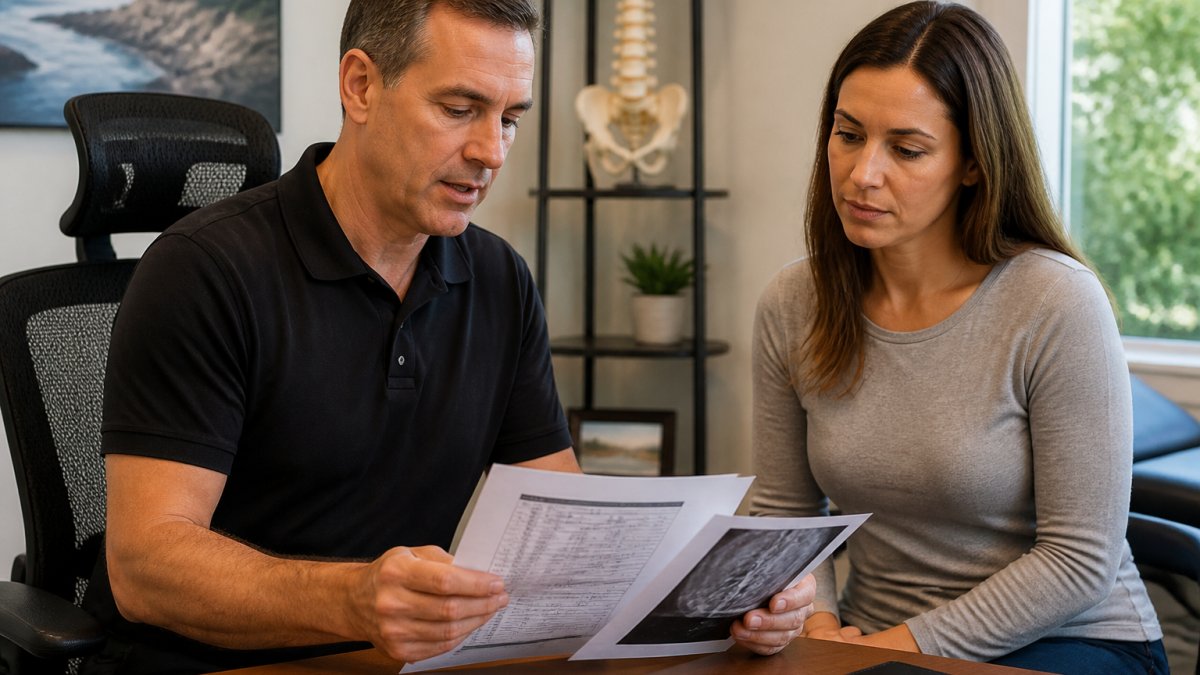
Imaging and a hands-on clinical assessment guide the treatment plan. An MRI shows the disc and any nerve compression. A physical exam checks your movement, strength, and reflexes.
Bring your imaging reports, a list of medications, and notes on your symptoms. If you still need imaging, you can review X-ray and MRI services to see how to get the scans a screening requires.
Questions to Ask a Chiropractor About a Herniated Disc
The right questions to ask a chiropractor about a herniated disc protect you and set clear expectations. Ask these before you commit to care:
- What technique do you use, and how much force does it involve?
- How do you screen for red flags and contraindications?
- Will you coordinate with my doctor or physical therapist?
A provider who welcomes these questions and answers plainly is a good sign. You can also check a clinic’s background and credentials before booking.
Setting Stopping Rules and Measuring Your Own Response
Stopping rules keep care honest. Agree on a review point up front, then measure your own response against it. Track three things: pain level, how far you can move, and what daily tasks you can do again.
If you see no meaningful change after a fair trial, or if symptoms worsen, stop and reassess. A good treatment plan includes a clear exit and a referral path if structural correction is not helping.
Booking a Herniated Disc Assessment With Dr. Dom
A careful assessment is the safest first step before any structural correction. At Dr Dom, Dr. Dominick Fazzari brings over 35 years in private practice and a focus on Advanced Biostructural Correction™. We use gentle, low-force technique and build a plan around your imaging and symptoms, with home and office visits and no long-term contracts.
You can read more about herniated disc care or book an appointment with our team to get started.
Frequently Asked Questions
Can chiropractic adjustments make a herniated disc worse?
They can, which is why technique and screening matter. High-velocity spinal manipulation on an unstable or severely compressed disc carries a risk of symptom flare-ups and, in rare cases, more serious adverse events. Gentle, low-force approaches paired with a proper clinical assessment and imaging review lower that risk considerably. If you have neurological symptoms such as weakness or numbness, get medical clearance before any spinal adjustment, and tell the chiropractor exactly what your diagnosis is.
What should you tell a chiropractor before treatment for a herniated disc?
Bring your imaging reports, name every medication you take (especially blood thinners), and describe symptoms in detail: where the radiating pain travels, what makes it worse, and whether you have had numbness, tingling, or weakness. Mention any prior surgery, recent falls, or osteoporosis diagnosis. Ask directly whether the planned technique is low-force or high-velocity, and what the plan is if your symptoms worsen after a visit.
When should you avoid spinal manipulation with a herniated disc?
Skip manipulation, and see a physician first, if you have loss of bladder or bowel control, saddle numbness, sudden leg weakness, fever with back pain, unexplained weight loss, or pain following major trauma. These herniated disc red flag symptoms point to conditions where spinal manipulation is contraindicated. Also avoid it during pregnancy without obstetric clearance, with active infection, or with a bleeding disorder. Structural correction should only proceed after a clinical assessment rules these out.
How many sessions before you know structural correction is working?
Set a review point before you start, typically after a small block of visits, and judge it on function rather than how you feel the same afternoon. Track walking distance, sitting tolerance, and sleep quality. If those measures are not improving at the review, or if neurological symptoms are progressing, the plan should change or you should be referred for medical evaluation. Ask the chiropractor upfront what objective markers they use and when they would stop care.
A herniated disc deserves more than a quick adjustment. It deserves a real assessment, a gentle plan, and clear stopping rules. If you want care that starts with screening and puts safety first, get started with Dr Dom and take the first step toward moving with less pain.
