• 274 Madison Ave, Suite 1304 New York, NY 10016
  • 2 Leefield Gate, Melville, NY 11417

Two Locations

In New York

Top-Rated

NYC Chiropractor

Thousands Of

Satisfied Patients
For Consultation: (212) 682 4311

Tag Archives: advanced biostructural correction

9 Differences Between ABC and Traditional Chiropractic

Last Updated: November 4, 2026

Quick Summary

Advanced biostructural correction is a chiropractic approach that assesses alignment across the whole body, including the spine, pelvis and joints, and corrects the underlying pattern driving pain. Traditional chiropractic usually targets the restricted joint itself with short-lever, fast thrusts. ABC uses longer-lever, slower movements, and its evidence base is mainly practitioner accounts.

  • Traditional chiropractic focuses on the restricted joint and nearby tissue.
  • Advanced biostructural correction looks at posture and alignment across the whole body.
  • Traditional adjustments use short levers and fast, shallow thrusts.
  • ABC movements are slower and often lower in peak force.
  • Most ABC evidence comes from case reports and practitioner accounts, not large trials.

Table of Contents

What Is Advanced Biostructural Correction?

If you have tried regular chiropractic adjustments and felt relief fade within days, you are not alone. Advanced Biostructural Correction, or ABC, is a structural approach that focuses on how the whole body is aligned, not only on the joint that hurts. Dr. Dominick Fazzari, a licensed chiropractor, offers this method at Dr Dom. (Source: a 2022 study on spinal manipulation effectiveness)

Advanced Biostructural Correction is a chiropractic technique that assesses and corrects alignment across the spine, pelvis and joints to address the underlying structure driving pain and dysfunction.

The method looks for patterns. A tight hip, a shifted pelvis or a stiff upper back can all pull on the neck or lower back. ABC tries to fix the pattern instead of chasing the symptom.

Want the full method explained step by step? Read how advanced biostructural correction works: a complete guide.

How Traditional Chiropractic Techniques Work

Traditional chiropractic care centers on spinal manipulation, often called an adjustment. A practitioner uses a quick, controlled thrust on a joint that has lost normal motion. Many people know this as the “pop” that often accompanies the movement.
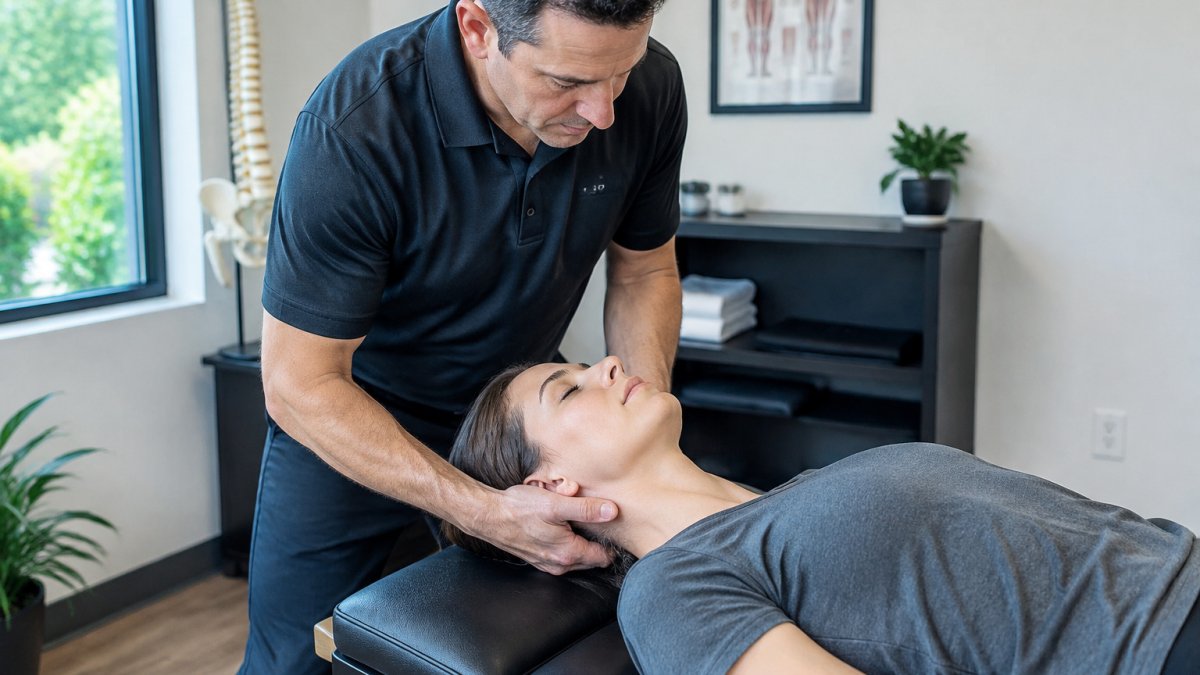
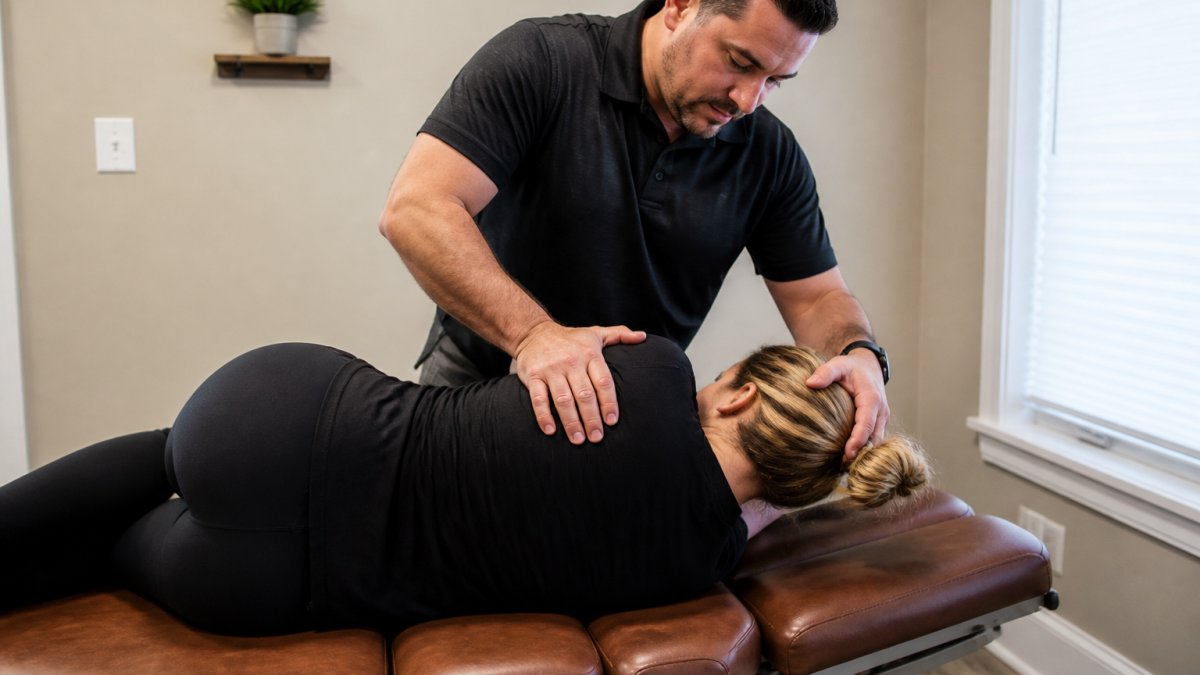
Diagram illustrating how traditional chiropractic methods align with advanced biostructural correction processes.

Common traditional techniques include:

  • High-velocity, low-amplitude (HVLA) adjustments: Short, fast thrusts applied to a specific joint
  • Activator-style instrument adjustments: A handheld device delivers a light, quick impulse
  • Soft-tissue and mobilization work: Hands-on methods that loosen muscles around the joint
  • Exercise and posture advice: Guidance to support gains between visits

The aim is to restore motion in restricted joints and reduce nerve irritation. Results vary by patient, and the evidence base differs across conditions.

Advanced Biostructural Correction vs Traditional Chiropractic: Key Differences

The two approaches share roots in manual care, yet they differ in how they think about cause, force and the goal of treatment. Here is where the gaps show up most.

Structural alignment and posture

Traditional care usually targets the joint where pain is felt. A practitioner identifies a segment that has lost motion, then restores motion at that segment. ABC looks at posture and alignment across the full body.

  • Traditional: Focuses on the restricted segment and the local tissue around it
  • ABC: Looks at the pelvis, spine and posture together, then treats the pattern it believes is pulling the body out of line

Adjustment force, lever length and speed

  • Lever length: Traditional HVLA adjustments use a short lever, the practitioner’s hands are close to the joint being moved. ABC uses a longer lever, often contacting the body farther from the target segment, which changes the force vector transmitted through the spine.
  • Speed and force: HVLA delivers a high-velocity, low-amplitude thrust, fast and shallow. ABC movements are slower and, practitioners say, lower in peak force, though the total force applied over the movement can still be substantial.
  • Direction of correction: Traditional adjustments are often described as restoring motion in a restricted joint. ABC practitioners describe moving segments in a specific direction they believe the body cannot correct on its own, then letting the body reorganize around that change.
  • Patient experience: Patients who dislike sudden movements often prefer the slower method, though preference is personal. Some people find the longer-lever contact unfamiliar at first because it does not feel like a conventional adjustment.

Ask the practitioner how they adapt their technique to your situation before deciding which approach suits you.

Treatment goals and visit structure

Traditional care often aims at symptom relief and restored motion in the treated segment, with a course of visits reassessed as symptoms change.

What this means for choosing

The right choice depends on your condition, your tolerance for the technique and what you want the treatment to achieve.

The two approaches differ in how they think about cause, force and the goal of treatment. The table below summarises the main gaps the article describes.

AspectTraditional chiropracticAdvanced Biostructural Correction
Main focusThe restricted joint and nearby tissueAlignment of the whole body, including posture
Lever lengthShort lever, hands close to the jointLonger lever, contact farther from the target segment
Speed and forceFast, shallow thrust (HVLA)Slower movements, often lower peak force
Direction of correctionRestores motion in a restricted jointMoves segments in a set direction the body cannot correct alone
Evidence baseSubstantial research, especially for low back painMainly case reports and practitioner accounts

What the Research Says About Each Approach

The honest way to compare approaches is to separate what is well studied from what is claimed.

BOOK AN APPOINTMENT →

Evidence for traditional chiropractic and spinal manipulation

Spinal manipulation has a substantial research base, though its quality varies by condition. For low back pain, systematic reviews and clinical practice guidelines, including those from the American College of Physicians, recognize manual therapy, including spinal manipulation, as a reasonable nonpharmacologic option for acute and chronic low back pain, typically as part of a broader plan that includes exercise and education (American College of Physicians issues guideline for treating nonradicular low back pain). For neck pain, the evidence is more mixed: some trials show benefit for short-term pain and function, while others show effects similar to mobilization or exercise. For many other conditions, the evidence is thinner or inconclusive.

What this means in plain terms: manipulation is not a cure-all, but for common back and neck complaints it has been studied enough that regulators and guideline bodies can take a position on it.

Evidence for Advanced Biostructural Correction

ABC-specific research is much smaller. The published literature consists mainly of case reports, practitioner-authored descriptions of the method and small observational accounts rather than large randomized controlled trials. That does not make the approach worthless, but it does mean claims about whole-body structural correction rest more on practitioner experience than on controlled evidence. A reader should treat statements that ABC “corrects” alignment permanently as a hypothesis being tested in practice, not an established finding.

How to judge the evidence yourself

  • Check the study type. Randomized controlled trials and systematic reviews carry more weight than case reports or practitioner commentary.
  • Check the condition. Evidence for low back pain does not automatically transfer to neck pain, headaches or posture claims.
  • Check who funded and wrote it. Practitioner-authored method descriptions are useful for understanding technique but are not independent evidence of effectiveness.
  • Check the outcome. Pain relief, function and structural change are different outcomes; a study showing one does not prove the others.

Before choosing any method, ask your provider which studies support their approach and whether those studies were independent. The American Chiropractic Association and the National Center for Complementary and Integrative Health both publish plain-language overviews of the evidence. You can also check the National Library of Medicine’s PubMed database for peer-reviewed trials and read the abstracts yourself.

Ask any provider which independent research supports their approach before committing to a treatment plan.

Advanced Biostructural Correction Safety, Risks and Contraindications

Any hands-on spinal treatment carries some risk. Ask your provider to explain the risks that apply to your situation.

Some people should avoid manipulation altogether or discuss it carefully with their doctor first. This includes people with certain fractures, osteoporosis, or disc conditions. If you have a herniated disc, read how to tell if structural correction is safe for herniated discs before booking.

ABC is not a substitute for medical care. Anyone with numbness, weakness, loss of bladder or bowel control, or pain after an injury should see a physician promptly.

Costs, Insurance and Realistic Treatment Expectations

Pricing depends on the visit and your care plan. For current fees and payment options, contact Dr Dom directly through the Dr Dom website.

Insurance coverage for chiropractic care varies by plan. Check your policy before your first visit. No single approach works for everyone. If you plan to book a home or office visit in Manhattan, you can read about how to book a mobile chiropractor in Manhattan and what to expect.

What to Expect After a Chiropractic Adjustment, and Your Next Step

Soreness for a day or two is common after an adjustment, and this usually fades. Most providers recommend gentle movement and follow-up visits to hold gains. Keeping a simple log of symptoms and activity can help you judge progress.

If you are wondering why relief does not last, read why chiropractic adjustments don’t last: a practical guide. For neck pain specifically, see what a chiropractor for neck pain in Manhattan involves.

Frequently Asked Questions

What is the difference between Advanced Biostructural Correction and traditional chiropractic?

Both are manual approaches to the spine and joints, but they differ in emphasis. Advanced Biostructural Correction focuses on full-body structural alignment and posture. Traditional chiropractic commonly uses short-lever, high-velocity adjustments aimed at specific joint restrictions. Neither approach is universally better. The right choice depends on your condition, your history and your comfort with different techniques, so discuss both options with a qualified provider before deciding.

Is Advanced Biostructural Correction safe?

Manual spinal care carries some risks, including soreness after treatment and, rarely, more serious complications. The safety profile of any technique depends on the patient’s health history, imaging findings and how the provider screens for contraindications. Ask about screening, about existing conditions such as herniated discs, and about alternatives if you have concerns. A consultation with a licensed clinician is the appropriate way to assess your individual risk.

What should I ask a chiropractor before starting treatment?

Ask what the initial examination includes, what technique will be used and why, how many visits are typically needed to reassess progress, and what signs would mean you should stop or see another provider. Ask about fees, whether services are covered by your insurance, and whether you can get a written treatment plan. Good providers explain red flags clearly and are willing to refer you elsewhere when care is not the right fit.


Ready to see whether structural correction fits your situation? BOOK AN APPOINTMENT with Dr Dom for an individualized assessment.


How Advanced Biostructural Correction Works: A Complete Guide

Table of Contents

Last Updated: October 18, 2026

What Advanced Biostructural Correction Is

Advanced Biostructural Correction, commonly called ABC, is a chiropractic methodology that restores full-body structural alignment through a systematic sequence of low-velocity, high-amplitude adjustments and soft tissue work. Unlike traditional chiropractic, which often treats isolated areas of pain, ABC targets the entire skeletal and soft tissue system to correct underlying mechanical dysfunction.

The core principle behind advanced biostructural correction is that many chronic pain conditions stem from cumulative structural misalignment, particularly in the spine, ribs, and supporting soft tissues.

The technique follows a specific correction sequence designed to work predictably through the body’s structural hierarchy, unlike traditional chiropractic’s focus on symptomatic relief through isolated adjustments. We approach ABC as a full-body structural restoration process rather than a symptom-management tool.

Pro TipThe key distinction: ABC treats structure first, with symptom relief as a secondary outcome. This means your initial appointments focus on assessment and foundational corrections, not immediate pain reduction.

How the ABC Technique Works: The Correction Sequence

Advanced biostructural correction operates through a methodical progression of adjustments and releases that address structural dysfunction from the foundation upward. The technique relies on understanding how misaligned bones, restricted soft tissues, and mechanical tension in the spinal cord and meninges (the membrane surrounding the spinal cord) interact to create pain and dysfunction.

The correction sequence begins with assessment of your entire skeletal structure, not just where you feel pain. An ABC-trained practitioner evaluates spinal alignment, rib positioning, pelvic balance, and overall body mechanics to determine where corrections should begin and in what sequence they should progress.

Initial Assessment and Structural Analysis

Your first ABC appointment involves detailed structural evaluation. The practitioner examines your spine, skeletal alignment, posture, and movement to identify distortions driving your symptoms, many of which may not be where you feel pain.

The practitioner looks for specific misalignments: vertebral subluxations (partial dislocations), rib restrictions, pelvic tilts, and how these affect overall body mechanics, mapping your structural dysfunction so corrections follow a logical, predictable sequence.

This analysis is critical because advanced biostructural correction assumes correcting the primary structural fault will cascade into corrections throughout your system.

Key TakeawayStructural assessment in ABC is comprehensive, practitioners evaluate your entire skeletal system, not just the area causing pain. This prevents treating symptoms while missing the underlying structural driver.

The Role of Meningeal Releases and Soft Tissue Work

Meningeal releases represent a distinctive component of advanced biostructural correction. The meninges are the connective tissue membranes surrounding your spinal cord. When vertebrae misalign or soft tissues become restricted, the meninges can experience mechanical tension, potentially affecting nerve function and spinal cord mobility.

ABC practitioners use gentle, targeted stretching and mobilization to release this meningeal tension and restore the spinal cord’s ability to move freely within its protective covering. This work is often paired with soft tissue techniques addressing muscle restrictions, fascia tightness, and tissue adhesions that limit structural mobility.

The soft tissue component includes targeted stretching, tissue mobilization, and sometimes gentle manipulation of muscles and connective tissue that have adapted to your misalignment.

Bone Alignment and Specific Adjustments

Once soft tissues and meningeal tension are addressed, ABC practitioners perform specific adjustments to restore bone alignment.

Each adjustment targets a precise vertebral misalignment identified during your structural assessment, moving the bone back toward its correct anatomical position to reduce mechanical stress on surrounding nerves, blood vessels, and soft tissues.

Advanced biostructural correction emphasizes that bone alignment must be maintained by addressing the soft tissues and movement patterns that created the misalignment.

Diagram showing the advanced biostructural correction sequence for neck and upper back spinal adjustments

What to Expect During a Chiropractic Adjustment with ABC

An ABC appointment differs substantially from traditional chiropractic visits.

During the adjustment phase, you’ll experience soft tissue work, meningeal release techniques, and specific bone adjustments. Soft tissue work may involve stretching, mobilization, or gentle pressure on restricted areas; meningeal releases often feel like gentle, sustained stretching in your neck or lower back; and bone adjustments are typically low-velocity but involve noticeable movement and positioning changes.

Most patients report ABC adjustments feel more methodical than traditional chiropractic, with less sudden “cracking” and more deliberate repositioning. Sessions typically last 30-60 minutes depending on how much structural work your body requires.

After your adjustment, you may feel immediate relief, mild soreness, or structural “unwinding” as your body adapts. Some patients experience what practitioners call an “unwind”, a temporary increase in sensation or mild discomfort as the nervous system recalibrates, which typically resolves within 24-48 hours.

Watch OutExpect some initial soreness or adjustment reactions, particularly in your first 2-3 sessions. This is normal as your body adapts to corrected alignment. If soreness persists beyond 48 hours or worsens, contact your practitioner immediately.

ABC Chiropractic Benefits: Alignment, Posture, and Nervous System Freedom

Practitioners and patients report that advanced biostructural correction produces benefits beyond pain relief.

Many patients report improved respiratory function after ABC treatment, particularly those with first-rib restrictions or upper-back misalignments. Correcting these distortions improves airway space and makes breathing easier, which often translates to increased energy levels throughout the day.

“Nervous system freedom” is central to ABC philosophy.

Restoration of full mobility represents another commonly reported benefit. As structural alignment improves and soft tissues release, your range of motion typically increases. Activities that felt restricted or painful often become easier and more comfortable.

Advanced Biostructural Correction Evidence: What Research Shows

The evidence base for advanced biostructural correction remains limited compared to traditional chiropractic or conventional medical treatments.

This doesn’t mean ABC is ineffective, it means the research foundation is still developing.

When evaluating ABC, distinguish between the underlying mechanisms (spinal alignment affecting nerve function), which have broader research support, and the specific ABC methodology itself, which has limited independent validation.

BOOK AN APPOINTMENT →

Patients considering ABC should ask their practitioner about their clinical outcomes, how they measure patient progress, and what realistic timelines they’ve observed with similar conditions.

The American Chiropractic Association’s clinical guidelines outline evidence standards for chiropractic care and may help you evaluate what constitutes meaningful evidence for any chiropractic approach.

ABC vs Activator Method: How They Differ

The Activator Method and advanced biostructural correction represent two distinct chiropractic approaches, though both emphasize systematic, specific adjustments rather than general manipulation.

The Activator Method uses a handheld mechanical instrument delivering precise, controlled impulses to specific vertebrae, applying consistent force without the variability of manual adjustments.

Advanced biostructural correction, by contrast, emphasizes comprehensive structural assessment and systematic correction of the entire skeletal system, incorporating significant soft tissue work, meningeal releases, and attention to how all body structures interrelate.

The Activator Method works well for patients who prefer instrument-based adjustments or who have conditions where manual manipulation feels uncomfortable. ABC appeals to patients seeking comprehensive structural restoration and those willing to invest more time in the correction process.

Aspect

Activator Method

Advanced Biostructural Correction

Primary Tool

Handheld mechanical instrument

Manual adjustments and soft tissue work

Session Duration

15-20 minutes

30-60 minutes

Scope

Isolated vertebral corrections

Full-body structural integration

Soft Tissue Work

Minimal

Extensive

Meningeal Focus

Not emphasized

Central to methodology

Best For

Patients preferring instrument-based care

Those seeking comprehensive structural restoration

Who Is a Good Candidate for Advanced Biostructural Correction

Advanced biostructural correction works best for patients with chronic musculoskeletal issues that have resisted traditional treatment. If conventional chiropractic, physical therapy, or medical treatments haven’t provided sustained relief, ABC may offer a different structural perspective worth exploring.

Ideal candidates typically have structural misalignments contributing to symptoms such as chronic neck pain, lower back pain, postural dysfunction, or movement restrictions. Athletes and active individuals seeking structural optimization for performance often respond well to ABC’s systematic approach.

However, ABC may not be appropriate for everyone.

The best way to determine candidacy is a consultation with a qualified ABC practitioner, who can assess your condition, explain whether ABC addresses your structural issues, and discuss realistic outcomes.

Best ForChronic pain sufferers who’ve tried traditional approaches without lasting relief, athletes seeking structural optimization, office workers with postural dysfunction, individuals with scoliosis or degenerative disc issues seeking non-invasive management.

Risks, Contraindications, and Safety Considerations

Like all chiropractic care, advanced biostructural correction carries risks that deserve honest discussion.

More serious risks, while rare, include nerve irritation, disc herniation, or vascular complications from spinal manipulation.

Pregnancy requires special consideration.

Recent spinal surgery, acute inflammation, or undiagnosed neurological symptoms warrant medical evaluation before ABC treatment.

Informed consent matters. Before beginning ABC, you should understand the proposed treatment plan, realistic outcomes, potential risks, and alternatives; a practitioner who rushes this discussion or guarantees specific outcomes raises legitimate concerns.

The relationship between your primary care physician and your ABC practitioner matters. Ideally, these providers communicate about your care.

The American Medical Association’s guidance on chiropractic care safety provides additional perspective on risk assessment for spinal manipulation.


Advanced biostructural correction represents a systematic approach to structural restoration that differs meaningfully from traditional chiropractic care. If you’ve struggled with chronic pain or structural dysfunction, a consultation with Dr Dom can help determine whether advanced biostructural correction addresses your underlying structural issues. Current clinical standards for chiropractic practice outline what to expect from qualified practitioners.

Frequently Asked Questions

What is Advanced Biostructural Correction and how does it differ from traditional chiropractic?

Advanced Biostructural Correction (ABC) is a structural alignment technique that focuses on correcting bone position, releasing soft tissues, and reducing mechanical tension on the nervous system. Unlike traditional chiropractic, which often addresses isolated joint dysfunction, ABC uses a systematic correction sequence targeting the entire skeletal structure. The approach emphasizes meningeal releases and specific low-velocity adjustments designed to create lasting alignment changes rather than temporary relief.

What should I expect during an Advanced Biostructural Correction session?

Your first session typically includes a detailed structural assessment to identify misalignments and areas of mechanical tension. The practitioner will perform targeted adjustments using specific techniques tailored to your body’s needs. Sessions may involve soft tissue work, meningeal releases, and bone realignment adjustments. Most patients experience the process as hands-on and methodical, with the practitioner explaining each step. Follow-up sessions build on previous corrections as your body gradually restabilizes in proper alignment.

Is there scientific evidence supporting Advanced Biostructural Correction?

ABC is based on principles of structural biomechanics and nervous system function, though independent peer-reviewed research on the ABC method specifically is limited. Some concepts underlying ABC, such as the relationship between spinal alignment and nerve function, align with established chiropractic and orthopedic principles. Practitioners report consistent clinical outcomes, but prospective patients should discuss the current evidence base with their provider and understand that outcomes vary individually. Consulting with a qualified practitioner can help you determine if ABC is appropriate for your condition.

How does ABC differ from the Activator Method?

The Activator Method uses a handheld spring-loaded instrument to deliver rapid, high-amplitude impulses to specific joints, focusing on isolated adjustments. Advanced Biostructural Correction, by contrast, uses hands-on, low-velocity techniques and emphasizes soft tissue work and meningeal releases alongside bone alignment. ABC aims to address the entire structural system and reduce mechanical tension on nerves, while the Activator Method targets individual joint restrictions. The choice between them depends on your condition, preferences, and practitioner expertise.

What are the main benefits of Advanced Biostructural Correction?

Patients often report improved spinal alignment, reduced chronic pain, better posture, enhanced mobility, and improved respiratory function. By freeing the nervous system from mechanical tension, ABC may support better overall body function. Many people experience relief from stubborn pain that didn’t respond to other treatments. Benefits typically develop over multiple sessions as structural corrections stabilize and your body adapts to proper alignment.

Am I a good candidate for Advanced Biostructural Correction if I have degenerative discs or scoliosis?

Many people with degenerative disc disease or scoliosis can benefit from ABC, but candidacy depends on your specific condition and medical history. Structural correction may help reduce mechanical stress on affected areas and improve overall alignment. However, certain conditions require careful assessment before beginning treatment. A consultation with a qualified ABC practitioner will determine whether this approach is appropriate for you and identify any contraindications or necessary precautions.

Why do adjustments from traditional chiropractors sometimes not stick, and how does ABC create longer-lasting results?

Traditional adjustments often address isolated joint dysfunction without correcting underlying structural imbalances. When the broader skeletal system remains misaligned, joints may return to their original position. Advanced Biostructural Correction works systematically to realign the entire structure and release soft tissue restrictions that hold misalignments in place. By addressing root structural causes rather than symptoms alone, ABC aims to create stable, lasting corrections. Results depend on consistency, body mechanics, and individual healing capacity.

Hi, How Can We Help You?