
• 274 Madison Ave, Suite 1304 New York, NY 10016
  • 2 Leefield Gate, Melville, NY 11417

Two Locations

In New York

Top-Rated

NYC Chiropractor

Thousands Of

Satisfied Patients
For Consultation: (212) 682 4311

Tag Archives: what to expect after a chiropractic adjustment

9 Differences Between ABC and Traditional Chiropractic

Last Updated: November 4, 2026

Quick Summary

Advanced biostructural correction is a chiropractic approach that assesses alignment across the whole body, including the spine, pelvis and joints, and corrects the underlying pattern driving pain. Traditional chiropractic usually targets the restricted joint itself with short-lever, fast thrusts. ABC uses longer-lever, slower movements, and its evidence base is mainly practitioner accounts.

  • Traditional chiropractic focuses on the restricted joint and nearby tissue.
  • Advanced biostructural correction looks at posture and alignment across the whole body.
  • Traditional adjustments use short levers and fast, shallow thrusts.
  • ABC movements are slower and often lower in peak force.
  • Most ABC evidence comes from case reports and practitioner accounts, not large trials.

Table of Contents

What Is Advanced Biostructural Correction?

If you have tried regular chiropractic adjustments and felt relief fade within days, you are not alone. Advanced Biostructural Correction, or ABC, is a structural approach that focuses on how the whole body is aligned, not only on the joint that hurts. Dr. Dominick Fazzari, a licensed chiropractor, offers this method at Dr Dom. (Source: a 2022 study on spinal manipulation effectiveness)

Advanced Biostructural Correction is a chiropractic technique that assesses and corrects alignment across the spine, pelvis and joints to address the underlying structure driving pain and dysfunction.

The method looks for patterns. A tight hip, a shifted pelvis or a stiff upper back can all pull on the neck or lower back. ABC tries to fix the pattern instead of chasing the symptom.

Want the full method explained step by step? Read how advanced biostructural correction works: a complete guide.

How Traditional Chiropractic Techniques Work

Traditional chiropractic care centers on spinal manipulation, often called an adjustment. A practitioner uses a quick, controlled thrust on a joint that has lost normal motion. Many people know this as the “pop” that often accompanies the movement.
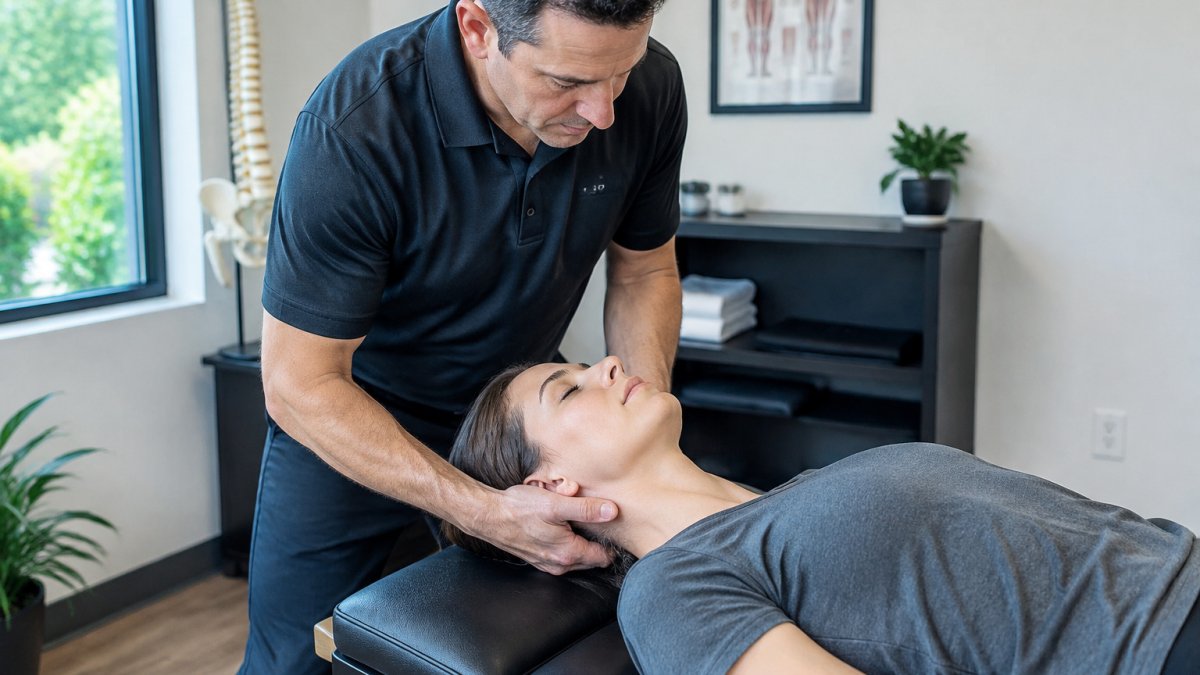
Diagram illustrating how traditional chiropractic methods align with advanced biostructural correction processes.

Common traditional techniques include:

  • High-velocity, low-amplitude (HVLA) adjustments: Short, fast thrusts applied to a specific joint
  • Activator-style instrument adjustments: A handheld device delivers a light, quick impulse
  • Soft-tissue and mobilization work: Hands-on methods that loosen muscles around the joint
  • Exercise and posture advice: Guidance to support gains between visits

The aim is to restore motion in restricted joints and reduce nerve irritation. Results vary by patient, and the evidence base differs across conditions.

Advanced Biostructural Correction vs Traditional Chiropractic: Key Differences

The two approaches share roots in manual care, yet they differ in how they think about cause, force and the goal of treatment. Here is where the gaps show up most.

Structural alignment and posture

Traditional care usually targets the joint where pain is felt. A practitioner identifies a segment that has lost motion, then restores motion at that segment. ABC looks at posture and alignment across the full body.

  • Traditional: Focuses on the restricted segment and the local tissue around it
  • ABC: Looks at the pelvis, spine and posture together, then treats the pattern it believes is pulling the body out of line

Adjustment force, lever length and speed

  • Lever length: Traditional HVLA adjustments use a short lever, the practitioner’s hands are close to the joint being moved. ABC uses a longer lever, often contacting the body farther from the target segment, which changes the force vector transmitted through the spine.
  • Speed and force: HVLA delivers a high-velocity, low-amplitude thrust, fast and shallow. ABC movements are slower and, practitioners say, lower in peak force, though the total force applied over the movement can still be substantial.
  • Direction of correction: Traditional adjustments are often described as restoring motion in a restricted joint. ABC practitioners describe moving segments in a specific direction they believe the body cannot correct on its own, then letting the body reorganize around that change.
  • Patient experience: Patients who dislike sudden movements often prefer the slower method, though preference is personal. Some people find the longer-lever contact unfamiliar at first because it does not feel like a conventional adjustment.

Ask the practitioner how they adapt their technique to your situation before deciding which approach suits you.

Treatment goals and visit structure

Traditional care often aims at symptom relief and restored motion in the treated segment, with a course of visits reassessed as symptoms change.

What this means for choosing

The right choice depends on your condition, your tolerance for the technique and what you want the treatment to achieve.

The two approaches differ in how they think about cause, force and the goal of treatment. The table below summarises the main gaps the article describes.

AspectTraditional chiropracticAdvanced Biostructural Correction
Main focusThe restricted joint and nearby tissueAlignment of the whole body, including posture
Lever lengthShort lever, hands close to the jointLonger lever, contact farther from the target segment
Speed and forceFast, shallow thrust (HVLA)Slower movements, often lower peak force
Direction of correctionRestores motion in a restricted jointMoves segments in a set direction the body cannot correct alone
Evidence baseSubstantial research, especially for low back painMainly case reports and practitioner accounts

What the Research Says About Each Approach

The honest way to compare approaches is to separate what is well studied from what is claimed.

BOOK AN APPOINTMENT →

Evidence for traditional chiropractic and spinal manipulation

Spinal manipulation has a substantial research base, though its quality varies by condition. For low back pain, systematic reviews and clinical practice guidelines, including those from the American College of Physicians, recognize manual therapy, including spinal manipulation, as a reasonable nonpharmacologic option for acute and chronic low back pain, typically as part of a broader plan that includes exercise and education (American College of Physicians issues guideline for treating nonradicular low back pain). For neck pain, the evidence is more mixed: some trials show benefit for short-term pain and function, while others show effects similar to mobilization or exercise. For many other conditions, the evidence is thinner or inconclusive.

What this means in plain terms: manipulation is not a cure-all, but for common back and neck complaints it has been studied enough that regulators and guideline bodies can take a position on it.

Evidence for Advanced Biostructural Correction

ABC-specific research is much smaller. The published literature consists mainly of case reports, practitioner-authored descriptions of the method and small observational accounts rather than large randomized controlled trials. That does not make the approach worthless, but it does mean claims about whole-body structural correction rest more on practitioner experience than on controlled evidence. A reader should treat statements that ABC “corrects” alignment permanently as a hypothesis being tested in practice, not an established finding.

How to judge the evidence yourself

  • Check the study type. Randomized controlled trials and systematic reviews carry more weight than case reports or practitioner commentary.
  • Check the condition. Evidence for low back pain does not automatically transfer to neck pain, headaches or posture claims.
  • Check who funded and wrote it. Practitioner-authored method descriptions are useful for understanding technique but are not independent evidence of effectiveness.
  • Check the outcome. Pain relief, function and structural change are different outcomes; a study showing one does not prove the others.

Before choosing any method, ask your provider which studies support their approach and whether those studies were independent. The American Chiropractic Association and the National Center for Complementary and Integrative Health both publish plain-language overviews of the evidence. You can also check the National Library of Medicine’s PubMed database for peer-reviewed trials and read the abstracts yourself.

Ask any provider which independent research supports their approach before committing to a treatment plan.

Advanced Biostructural Correction Safety, Risks and Contraindications

Any hands-on spinal treatment carries some risk. Ask your provider to explain the risks that apply to your situation.

Some people should avoid manipulation altogether or discuss it carefully with their doctor first. This includes people with certain fractures, osteoporosis, or disc conditions. If you have a herniated disc, read how to tell if structural correction is safe for herniated discs before booking.

ABC is not a substitute for medical care. Anyone with numbness, weakness, loss of bladder or bowel control, or pain after an injury should see a physician promptly.

Costs, Insurance and Realistic Treatment Expectations

Pricing depends on the visit and your care plan. For current fees and payment options, contact Dr Dom directly through the Dr Dom website.

Insurance coverage for chiropractic care varies by plan. Check your policy before your first visit. No single approach works for everyone. If you plan to book a home or office visit in Manhattan, you can read about how to book a mobile chiropractor in Manhattan and what to expect.

What to Expect After a Chiropractic Adjustment, and Your Next Step

Soreness for a day or two is common after an adjustment, and this usually fades. Most providers recommend gentle movement and follow-up visits to hold gains. Keeping a simple log of symptoms and activity can help you judge progress.

If you are wondering why relief does not last, read why chiropractic adjustments don’t last: a practical guide. For neck pain specifically, see what a chiropractor for neck pain in Manhattan involves.

Frequently Asked Questions

What is the difference between Advanced Biostructural Correction and traditional chiropractic?

Both are manual approaches to the spine and joints, but they differ in emphasis. Advanced Biostructural Correction focuses on full-body structural alignment and posture. Traditional chiropractic commonly uses short-lever, high-velocity adjustments aimed at specific joint restrictions. Neither approach is universally better. The right choice depends on your condition, your history and your comfort with different techniques, so discuss both options with a qualified provider before deciding.

Is Advanced Biostructural Correction safe?

Manual spinal care carries some risks, including soreness after treatment and, rarely, more serious complications. The safety profile of any technique depends on the patient’s health history, imaging findings and how the provider screens for contraindications. Ask about screening, about existing conditions such as herniated discs, and about alternatives if you have concerns. A consultation with a licensed clinician is the appropriate way to assess your individual risk.

What should I ask a chiropractor before starting treatment?

Ask what the initial examination includes, what technique will be used and why, how many visits are typically needed to reassess progress, and what signs would mean you should stop or see another provider. Ask about fees, whether services are covered by your insurance, and whether you can get a written treatment plan. Good providers explain red flags clearly and are willing to refer you elsewhere when care is not the right fit.


Ready to see whether structural correction fits your situation? BOOK AN APPOINTMENT with Dr Dom for an individualized assessment.


The 2026 Guide to the Benefits of Full Body Alignment

Last Updated: November 17, 2026

Quick Summary

Full body alignment is the structural relationship between your spine, pelvis, and weight-bearing joints, and its main benefits are pain relief that holds, improved posture, greater mobility, and better balance and coordination. Correcting a structural cause may reduce recurring strain, while a level pelvis and centered spine give your postural muscles a more stable base.

  • Signs of misalignment include uneven shoulders or hips and one shoe wearing faster than the other.
  • A full-body chiropractic adjustment corrects segments across the whole frame in a specific order, not a single spot.
  • Most people feel some immediate relief and soreness in the first 24 to 48 hours after an adjustment.
  • Visit frequency depends on your presentation, not a fixed schedule, and lengthens as stability improves.
  • Use functional goals and baseline measurements, reassessed at set intervals, to measure progress honestly.
Wondering if your structure is the real problem?Dr Dom provides individualized chiropractic care focused on full-body alignment, at the office or your workplace.

Book an Alignment Visit

Table of Contents

What Full Body Alignment Means in 2026

Full body alignment is the structural relationship between your spine, pelvis, and the joints that carry your weight, and it matters because small shifts in that relationship change how every movement loads your body. This guide from Dr Dom covers what the benefits of full body alignment in 2026 actually look like, which claims hold up, and how to tell whether your own structure is working for you or against you. (Source: musculoskeletal conditions are among the most common causes of disability)

Here is the part most articles skip: alignment is not a posture you hold for a photo. It is a mechanical condition.

The National Institute of Arthritis and Musculoskeletal and Skin Diseases notes that musculoskeletal conditions are among the most common causes of disability, which is why structural care draws so much attention.

Below, we break down the signs of misalignment, the benefits in order, what a full-body chiropractic adjustment involves, and how to judge progress honestly.

Signs Your Body Is Out of Alignment

The clearest signs your body is out of alignment are uneven shoulders or hips, one shoe wearing faster than the other, a persistent head-forward posture, and discomfort that returns to the same spot after rest.

Watch for these patterns:

  • Uneven shoulders or hip height when you stand relaxed in front of a mirror
  • One-sided tension in the neck, upper back, or lower back that never fully resolves
  • Headaches that start at the base of the skull and climb
  • Reduced range of motion turning your head or reaching overhead
  • Recurring strain in the same muscle group despite stretching

A common mistake among office professionals is treating a single tight muscle as the problem when it is actually a compensation for a structural shift elsewhere.

If you recognize yourself in that list, a practical walkthrough of fixing body alignment for better energy can help you connect the dots between structure and how you feel day to day.

The Benefits of Full Body Alignment, Numbered

The benefits of full body alignment are often described as following one principle: when the frame is stacked correctly, the body may work with less interference. Not every claimed benefit carries the same weight of evidence, so the benefits below note the mechanism behind each and flag where the evidence is stronger or more uncertain.

  1. Pain relief that holds. Some people find that correcting a structural cause can reduce recurring strain and stubborn pain. The mechanism is described as mechanical: when a segment sits out of position, the muscles around it may guard, and that guarding can contribute to the ache. Structural correction is not a cure for all pain and is best considered alongside other care.
  2. Improved posture. Some people report that posture changes as a result of structural correction. The mechanism is described as a level pelvis and centered spine giving the postural muscles a more stable base. Long-term posture change generally depends on ongoing movement habits.
  3. Greater mobility and range of motion. Some people notice a fuller range of motion after structural correction. The mechanism is described as blocked segments restricting motion, with restored position possibly restoring range.
  4. Better balance and coordination. A level pelvis and centered spine may give the nervous system a reference point. The mechanism is proprioceptive: sensors in the joints and muscles report position, and a level frame may provide clearer signals.

Posture, Movement, and Joint Function

Posture is the visible output of structural alignment, and movement quality follows it. When spinal segments sit in the correct depth, direction, and sequence, joint motion improves and the muscles around them stop guarding.

Structural correction is generally understood to address segment position rather than muscle tightness alone, which is why stretching the same tight muscle may provide only temporary relief.

Nervous System, Stress, and Recovery

Nerve signals travel through the spinal column, so structural compression can affect how efficiently the nervous system communicates with the rest of the body.

We are careful about how we phrase this. Alignment care supports function.

If posture is your main concern, our guide on whether a chiropractor can fix your posture for good goes deeper into what is realistic.

What a Full-Body Chiropractic Adjustment Involves

A full-body chiropractic adjustment is a systematic correction of structural misalignment across the whole frame, not a single spot treatment. Because posture reflects how the spine, pelvis, and other segments work together, Clarendon Chiropractic connects whole-frame alignment with the way posture is maintained.

Diagram illustrating the clinical assessment process for achieving proper full body alignment during a session.

At Dr Dom, we do not twist, crack, or apply harsh moves. We gently reposition spinal bones in the right depth, direction, and sequence, then work on posture and structure progressively while pain settles.

The technique we use is Advanced Biostructural Correction, and you can read how Advanced Biostructural Correction works in full before your first visit.

What to Expect After a Chiropractic Adjustment

Most people feel some immediate relief and a degree of soreness in the first 24 to 48 hours, similar to the ache after a good workout. That pattern is normal and usually fades quickly. (Source: reduced range of motion)

What to expect after a chiropractic adjustment varies by person and by how long the misalignment has been present. Some patients notice easier movement the same day.

A few practical points:

  • Drink water and move gently afterward
  • Avoid heavy lifting for the rest of the day
  • Note what changed, so your next visit can build on it

The thing nobody tells you is that the soreness is often a sign the body is adjusting to corrected position, not a sign something went wrong. Report anything sharp or unusual to your clinician.

How Often to Get a Chiropractic Adjustment

Frequency depends on your presentation, not on a fixed schedule. Early in care, visits are typically closer together to establish correction. As stability improves, the interval lengthens.

A common myth is that once you start seeing a chiropractor you have to keep going forever.

For a fuller explanation of why results fade without structural correction, read why chiropractic adjustments don’t last.

Safety, Evidence Limits, and How to Measure Progress

Alignment care is not appropriate for everyone, and it carries risks that should be assessed for each individual. Honest guidance matters more than confident marketing here, and this is where most guides stay vague.

Who should use caution

  • Anyone with recent spinal fracture, suspected fracture, or severe osteoporosis
  • People with spinal cord compression or certain inflammatory joint conditions
  • Anyone with active infection, or who is on blood-thinning medication
  • Patients with a history of herniated discs who have not been cleared by their physician
  • Anyone with a known aneurysm, severe degenerative changes, or recent spinal surgery

If you have a diagnosed disc issue, tell your clinician before any adjustment. The American College of Physicians’ guidance on low back pain supports conservative, non-invasive care as a first line for most cases, and a proper assessment determines whether structural care fits your situation.

Common temporary effects and red flags

Some people feel soreness in the first day or two after treatment, similar to the ache after a good workout. Less common temporary effects include mild dizziness, fatigue, or a brief increase in local discomfort.

Watch out: seek medical evaluation promptly if you experience severe or worsening pain, numbness or weakness in the arms or legs, loss of bowel or bladder control, fever, or unexplained weight loss.

Limits of the evidence

Research on alignment and posture continues to develop. Ask your clinician to separate what is well-supported from what is plausible but unproven, and treat dramatic promises with caution.

How to measure progress

Vague promises of being aligned are not a measurement. Use functional criteria instead, and apply them the way we would ourselves:

  • A named functional goal, such as turning your head to check a blind spot without pain
  • A baseline measurement at the first visit, such as range of motion or a pain score
  • Reassessment at a set interval, not visit by visit
  • A clear answer to “what has changed” at each review
  • A treatment plan with an expected endpoint
Question to askWhy it matters
What is your goal for my treatment?Confirms the plan targets function, not visit count
How long will each session take?Sets realistic time expectations
How long will the full course last?Prevents open-ended scheduling
What can I expect to gain?Gives you a measurable outcome to track
What are the risks for my specific case?Confirms the clinician has assessed your contraindications

Ask these before you commit. A clinician who answers them clearly is a clinician worth working with.

Preparing for Your First Alignment Consultation at Dr Dom

Preparation is simple: bring your history, your questions, and a clear sense of what you want to be able to do again.

Before you arrive, write down:

  • When the discomfort started and what makes it worse
  • Previous treatments and what did or did not help
  • Any imaging or diagnoses you already have
  • Your functional goal for the next three months

You can review the services we offer before scheduling. Dr Dom offers home and office visits, and there are no long-term contracts.


Structural problems do not correct themselves, and the longer a compensation pattern runs, the more work it takes to unwind.

Frequently Asked Questions

How often should you get a full body adjustment?

There is no single schedule that fits everyone. How often to get a chiropractic adjustment depends on your posture habits, pain history, activity level, and how your body responds to the first few visits. A common approach is a short series of closer-spaced visits early on, then longer gaps as stability improves. Ask your chiropractor how long the full course is expected to last and what signs would show you can space visits out.

How can I tell if my body is out of alignment?

Common signs your body is out of alignment include uneven shoulders, one hip sitting higher than the other, a head that drifts forward of the shoulders, recurring neck or back discomfort, and stiffness that returns after stretching. None of these confirm a structural problem on their own. A hands-on assessment is the reliable way to tell whether alignment is actually contributing to your symptoms or whether something else is involved.

Are full body adjustments good for you?

Some people find that full body alignment work is associated with posture and comfort changes. Care is individualized to each patient’s needs, and posture habits and movement between visits also matter. It is not right for everyone. People with certain disc, bone, or inflammatory conditions should be assessed first, and a chiropractor should review your history before recommending a treatment plan.

What should I expect after a chiropractic adjustment?

Some people feel looser right after a full-body chiropractic adjustment. Some notice mild soreness for a day or two, similar to after exercise, and occasionally a brief return of old symptoms as the body adapts. Improvement is usually gradual rather than instant. Track how you sit, sleep, and move over the following week, and report anything unusual to your chiropractor so the plan can be adjusted.

Do I have to keep going to a chiropractor forever once I start?

A common myth is that chiropractic care becomes permanent once you begin. At Dr Dom, the aim is the opposite: as posture and structure become more stable, patients typically need less care over time, not more. The clinic does not use long-term contracts. Ask upfront what the goal of treatment is, how long the course should last, and what you can expect to gain, so you can judge progress for yourself.

Hi, How Can We Help You?