
Table of Contents
- Why Body Alignment Affects Your Energy Levels
- Signs of Poor Posture You Should Know
- How Breathing and Diaphragm Function Support Alignment
- Desk Posture Tips for Office Professionals
- Posture Exercises for Beginners: A Progressive Routine
- Daily Stretches for Better Posture and Mobility
- Mindful Movement: Walking, Sitting, and Standing with Better Alignment
- When to Seek Professional Assessment
- Frequently Asked Questions
Last Updated: October 19, 2026
Why Body Alignment Affects Your Energy Levels
Your posture shapes how your body functions. When your spine is misaligned, your muscles work harder to keep you upright. This extra effort drains your energy throughout the day.
Body alignment affects more than just comfort. It influences how your lungs expand, how oxygen reaches your cells, and how efficiently your nervous system operates. Poor alignment compresses your chest and restricts breathing. Restricted breathing means less oxygen.
The connection between spinal alignment and energy is direct and measurable.
Pro Tip
Your posture is not a cosmetic issue, it’s a physiological one. The position of your spine determines how much work your muscles must do just to keep you standing or sitting. Fix that position, and your body stops wasting energy on compensation.
Your posture is not a cosmetic issue, it’s a physiological one. The position of your spine determines how much work your muscles must do just to keep you standing or sitting. Fix that position, and your body stops wasting energy on compensation.
When your vertebrae stack properly, your muscles relax. Your diaphragm expands fully. Your heart pumps more efficiently. Energy that was spent fighting misalignment becomes available for movement, thinking, and recovery.
Signs of Poor Posture You Should Know
Poor posture develops gradually. Most people don’t notice it until pain arrives. By then, muscle imbalances are already established.
Watch for these warning signs:
- Rounded shoulders that roll forward when you’re not thinking about it
- Forward head position where your ears sit ahead of your shoulders
- Excessive upper back rounding (kyphosis) that creates a curved spine
- Lower back arching too much (hyperlordosis) with a protruding belly
- Feet that turn outward instead of pointing straight ahead
- Uneven weight distribution when standing, favoring one leg
- Neck tension and headaches that worsen as the day goes on
- Shoulder blade pain or tightness between your shoulder blades
These signs indicate your body is working against itself. Muscles on one side shorten while others lengthen and weaken. This imbalance creates tension, restricts movement, and depletes energy.
Watch Out
Ignoring these signs leads to chronic tension and accelerated wear on your discs and joints. What starts as poor posture becomes structural damage if left uncorrected.
Ignoring these signs leads to chronic tension and accelerated wear on your discs and joints. What starts as poor posture becomes structural damage if left uncorrected.
Poor posture also affects your mood and mental state. When your chest is compressed and your shoulders rounded, your nervous system interprets this as a defensive or stressed position. Your body responds by increasing cortisol and reducing energy production.
How Breathing and Diaphragm Function Support Alignment
Your diaphragm is a large muscle beneath your lungs. It’s responsible for 70% of your breathing work.
Slouching compresses your abdomen and restricts diaphragm movement.
Proper spinal alignment opens your ribcage. Your diaphragm can contract fully. Air fills your lungs completely.
The mechanics are simple: upright posture expands your chest cavity. An expanded chest cavity allows full diaphragm expansion.
When you fix body alignment for better energy, one of the first changes people notice is easier breathing.
American Lung Association guidance on breathing mechanics
Key Takeaway
Breathing efficiency depends on spinal alignment. You cannot achieve deep, full breathing with a collapsed posture. Fix your alignment, and your lungs work better automatically.
Breathing efficiency depends on spinal alignment. You cannot achieve deep, full breathing with a collapsed posture. Fix your alignment, and your lungs work better automatically.
Desk Posture Tips for Office Professionals
Office work creates specific alignment problems. Sitting for eight hours compresses your spine and weakens your core. Your hip flexors tighten. Your chest muscles shorten. Your back muscles lengthen and weaken.
Use these desk posture tips to counteract these effects:
- Position your monitor at eye level so your head stays neutral, not tilted down
- Keep your elbows at 90 degrees with your keyboard at wrist height
- Place your feet flat on the floor with your knees at 90 degrees
- Sit with your hips and knees level, not tilted forward or back
- Keep your shoulders relaxed away from your ears
- Use a chair with lumbar support that maintains your lower back curve
- Take a standing break every 30 minutes to reset your alignment
- Avoid crossing your legs, which rotates your pelvis and misaligns your spine
The goal is neutral spine positioning. Your ears should align with your shoulders. Your shoulders should align with your hips. Your hips should align with your knees.
Most office setups encourage poor alignment. Monitors sit too low. Chairs lack support. Desks are too high or too low.
OSHA ergonomic standards for office workstations
Pro Tip
The best posture is your next posture. Even perfect alignment becomes problematic if you hold it without moving. Stand up, stretch, and reset your position every 30 minutes.
The best posture is your next posture. Even perfect alignment becomes problematic if you hold it without moving. Stand up, stretch, and reset your position every 30 minutes.
Posture Exercises for Beginners: A Progressive Routine
Fixing body alignment requires consistent practice. These exercises activate the muscles that support proper posture. Start with Step 1 and progress only after you can perform each exercise comfortably for two weeks.
Step 1: Assess Your Current Alignment
Before exercising, understand where you are starting.
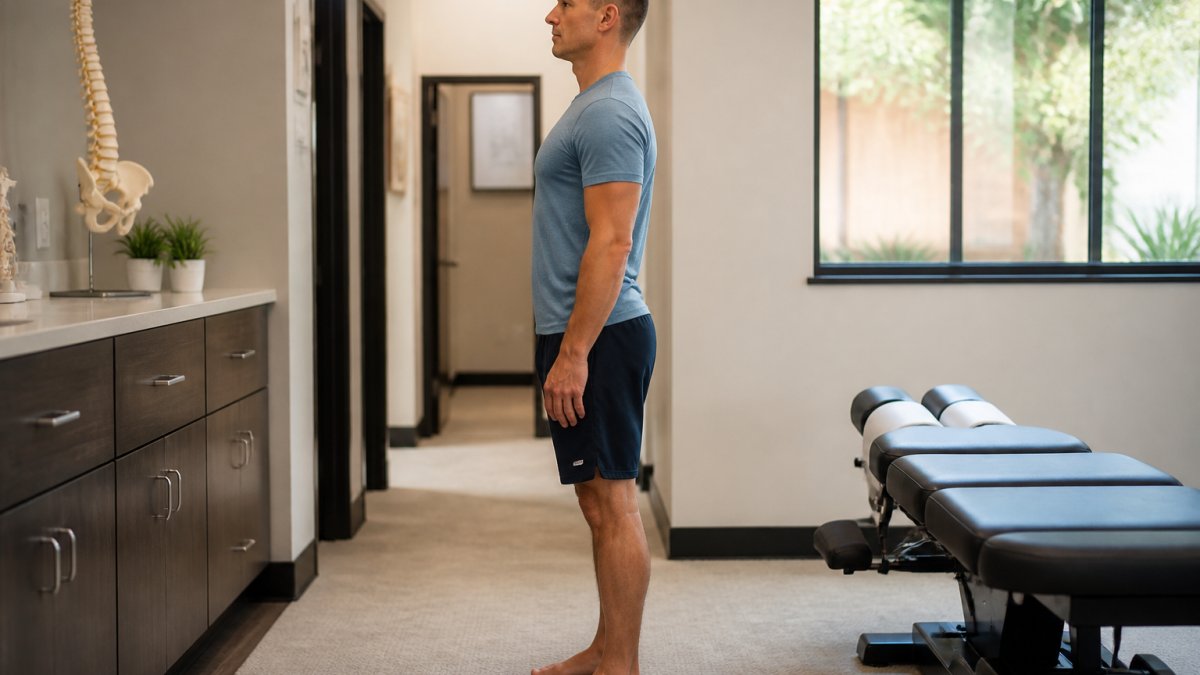
Stand sideways in front of a mirror. Take a photo from the side. Look at the line from your ear to your shoulder to your hip to your ankle.
Write down what you notice. This is your baseline. Return to this photo every two weeks to track progress.
Proper standing alignment means:
- Ears directly above shoulders
- Shoulders directly above hips
- Hips directly above knees
- Knees directly above ankles
- Feet pointing straight ahead
Most people discover their head is forward, their upper back is rounded, or their lower back arches too much. This assessment tells you which muscles need the most attention.
Step 2: Activate Your Core and Mid-Back
Your core stabilizes your spine. Your mid-back muscles pull your shoulders back and open your chest. These two muscle groups are critical for maintaining alignment.
Wall Angel Exercise (perform 2 sets of 10 reps, 3 times per week):
- Stand with your back against a wall
- Bend your elbows to 90 degrees with your upper arms at shoulder height
- Slowly slide your hands up the wall, keeping your elbows and back in contact with the wall
- Slide your hands back down to the starting position
- Move slowly and stop if your lower back arches away from the wall
Dead Bug Exercise (perform 2 sets of 8 reps per side, 3 times per week):
- Lie on your back with your knees bent and feet flat on the floor
- Raise your arms straight up toward the ceiling
- Lift one leg and extend it straight, hovering above the floor
- Lower that leg and repeat on the opposite side
- Keep your lower back pressed into the floor throughout
Perform these exercises three times per week. They activate the muscles that support your spine and prevent compensation patterns.
Step 3: Release Neck, Shoulder, and Back Tension
Tight muscles prevent proper alignment. Releasing this tension allows your spine to return to neutral.
Neck Tension Release (perform daily, 30 seconds per side):
- Sit upright in a chair
- Gently tilt your head toward your right shoulder
- Place your right hand on your head and apply light pressure
- Hold for 30 seconds and breathe deeply
- Repeat on the left side
Shoulder Blade Squeeze (perform 2 sets of 15 reps, 3 times per week):
- Stand with your arms at your sides
- Squeeze your shoulder blades together as if pinching a pencil between them
- Hold for 2 seconds
- Release and repeat
Thoracic Spine Rotation (perform 2 sets of 8 reps per side, 3 times per week):
- Lie on your side with your knees bent
- Extend your top arm across your body toward the floor
- Rotate your upper back, opening your chest toward the ceiling
- Return to starting position and repeat
- Perform all reps on one side, then switch
These exercises release the tension that holds you in poor alignment. Tension headaches, neck stiffness, and shoulder pain often resolve once these muscles relax.
Daily Stretches for Better Posture and Mobility
Stretching complements strengthening. Tight muscles restrict movement and pull you out of alignment. Stretching restores mobility so proper posture becomes comfortable.
Perform these stretches daily, holding each for 30 seconds:
Chest Opener Stretch:
- Stand in a doorway with your forearm on the frame at shoulder height
- Step forward gently until you feel a stretch across your chest
- Breathe deeply and relax into the stretch
Cat-Cow Stretch:
- Start on your hands and knees
- Arch your back gently, dropping your belly toward the floor
- Then round your spine, tucking your chin to your chest
- Flow between these positions slowly for 10 cycles
Child’s Pose:
- Kneel on the floor and bring your hips back toward your heels
- Extend your arms forward and rest your forehead on the floor
- Breathe deeply for 30 seconds
Quad and Hip Flexor Stretch:
- Kneel on one knee with the other foot forward
- Gently press your hips forward until you feel a stretch in the front of your hip
- Hold for 30 seconds and repeat on the other side
Daily stretching maintains the mobility that proper alignment requires. Consistency matters more than intensity. Five minutes of daily stretching produces better results than one intense session per week.
Mindful Movement: Walking, Sitting, and Standing with Better Alignment
Alignment is not something you do for 10 minutes during exercise. It’s something you maintain throughout your day. Mindful movement means paying attention to your posture during everyday activities.
Walking with Alignment:
- Keep your head level, eyes forward
- Relax your shoulders away from your ears
- Swing your arms naturally at your sides
- Step with your feet pointing straight ahead
- Engage your core lightly to support your spine
Sitting with Alignment:
- Sit with your hips and knees at 90 degrees
- Keep your feet flat on the floor
- Maintain a slight curve in your lower back
- Position your monitor at eye level
- Take standing breaks every 30 minutes
Standing with Alignment:
- Distribute your weight evenly across both feet
- Keep your feet hip-width apart
- Engage your core muscles lightly
- Relax your shoulders
- Align your ears over your shoulders
The goal is to make proper alignment automatic. This takes practice. Over time, good alignment becomes your default position.
Mayo Clinic resources on posture and spinal health
Key Takeaway
Mindful movement is the difference between temporary improvement and lasting change. You can do perfect exercises for 10 minutes, then slouch for eight hours and undo all your progress. Consistency throughout the day matters most.
Mindful movement is the difference between temporary improvement and lasting change. You can do perfect exercises for 10 minutes, then slouch for eight hours and undo all your progress. Consistency throughout the day matters most.
When to Seek Professional Assessment
Some alignment issues require professional evaluation. If you experience any of these situations, schedule an assessment with a qualified healthcare provider:
- Persistent pain that doesn’t improve with stretching and exercise after two weeks
- Numbness or tingling in your arms, hands, legs, or feet
- Sharp pain that worsens with certain movements
- Pain that radiates down your arm or leg
- Difficulty with balance or coordination
- Weakness in your muscles that doesn’t improve with exercise
- Visible spinal curvature or asymmetry in your body
- Previous injury or surgery affecting your spine or joints
- Chronic conditions like scoliosis or degenerative disc disease
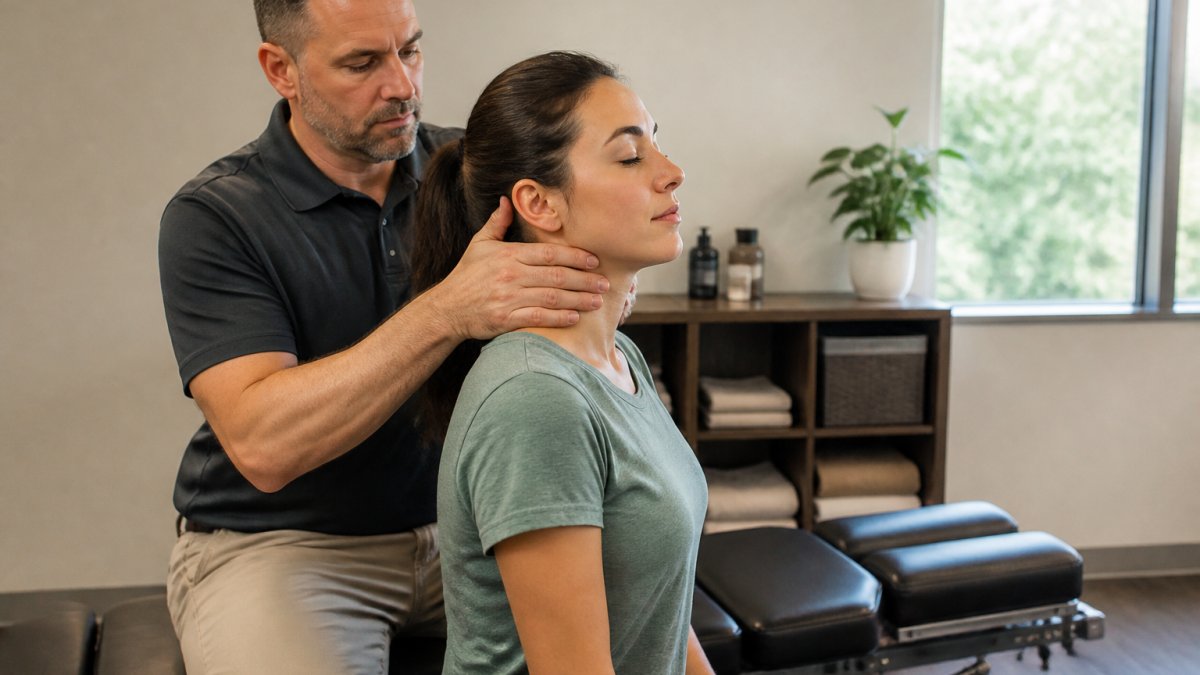
Professional assessment identifies structural issues that self-directed exercises cannot address. Some people need manual treatment to restore alignment before strengthening exercises become effective.
At Dr Dom, we specialize in assessing and correcting structural alignment issues using Advanced Biostructural Correction™ (ABC).
Many people find that fixing body alignment for better energy requires both self-directed practice and professional guidance.
Chronic fatigue often points to a structural problem your body is struggling to compensate for.
Frequently Asked Questions
Can poor posture make you feel tired?
Yes. Poor posture restricts breathing and forces muscles to work harder to support your spine, which drains energy throughout the day. When your body is misaligned, your diaphragm cannot expand fully, limiting oxygen intake. This combination of muscle strain and reduced oxygen triggers fatigue. Correcting body alignment removes these inefficiencies, allowing your breathing to deepen and your muscles to relax, which naturally restores energy.
What are the most common signs of poor posture?
Common signs include rounded shoulders, forward head posture, excessive slouching while sitting, and uneven weight distribution while standing. You might also experience neck tension, shoulder tension, or chronic back pain. Tension headaches and a tendency to feel tired by midday are also indicators. If you notice your hips and knees are not level when standing, or your feet are not flat on the floor, these suggest misalignment that warrants assessment.
How often should I do posture exercises and stretches?
Consistency matters more than intensity. Many people find that short, frequent movement breaks throughout the day help sustain better alignment and prevent tension from building up.
When should I see a chiropractor about posture or alignment issues?
Consider professional assessment if you experience persistent neck, shoulder, or back pain that doesn’t improve with home stretches and posture correction; if you have a history of disc issues or scoliosis and want to ensure your exercises are safe; or if your pain worsens with movement or daily activities. A licensed chiropractor can diagnose underlying structural issues and create a personalized plan tailored to your condition and goals.